
Mechanisms of Transport
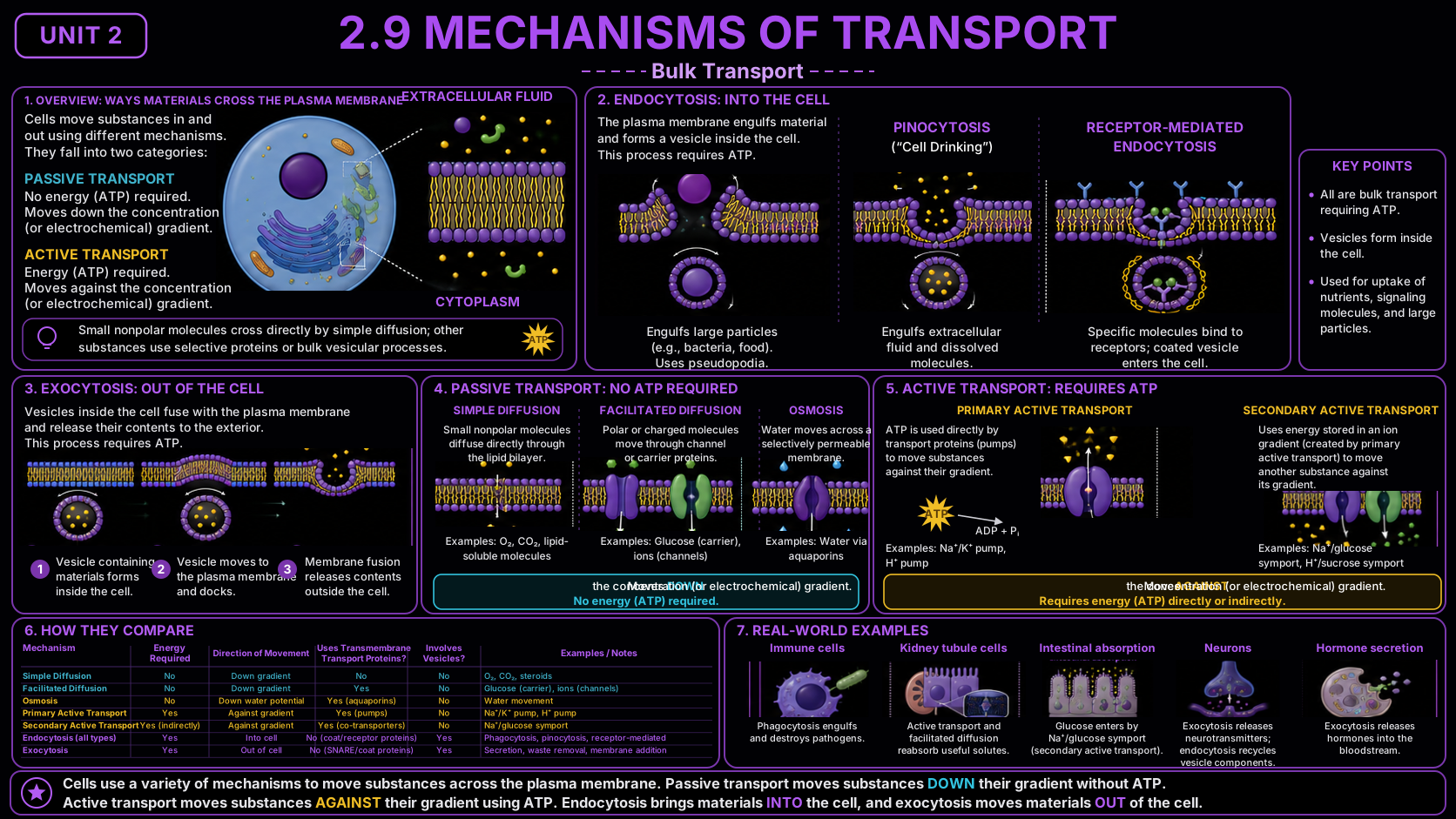
Diffusion and channels move small molecules across the membrane one at a time, but a cell also needs to import a whole bacterium, engulf a droplet of fluid, or release a burst of hormone all at once. That material is far too large — or far too much — to slip through a protein pore. So the cell moves it in bulk, wrapped inside a piece of membrane. In endocytosis the membrane folds inward, pinches off, and carries cargo in as a vesicle. In exocytosis a vesicle fuses with the membrane from the inside and dumps its contents out. This is bulk transport: material crosses the boundary packaged in membrane, never dissolved through it.
Because the cell has to bend, pinch, and fuse whole sheets of membrane, bulk transport always costs energy — it is an active process powered by ATP, regardless of which way the cargo is heading. That is the point that separates it from the transport that came before: a channel or diffusion follows the concentration gradient for free, but wrapping a payload in a vesicle is work the cell must pay for every time. Read the direction from the mechanism: membrane folding in means import, a vesicle fusing out means export, and both are the cell spending ATP to move what no pore could ever carry.
Interactive · Bulk Transport
Fold the membrane inward to engulf cargo as a vesicle, or fuse a vesicle outward to release it — and watch the ATP cost each move demands. Endocytosis on one side, exocytosis on the other, and the energy that both require.
Bulk Transport · Open the full sandbox →The common mistake here is treating bulk transport like the protein-mediated transport students just learned: assuming that endocytosis and exocytosis move cargo through channels or carrier proteins, and that moving "with the gradient" makes it free. Neither holds. The cargo never passes through a protein — it rides inside a membrane-bound vesicle — and bending and fusing that membrane costs ATP no matter which direction the material moves. Every scenario in this topic asks the same thing: say why vesicle packaging, and not a pore, is what carries the load, and why that packaging is never free.
The work
3 ways in · any order
Lesson
Mechanisms of Transport
›
Cells move material too large for any pore by wrapping it in membrane — endocytosis to bring it in, exocytosis to send it out, ATP spent either way. The lesson walks the ways students confuse bulk transport with protein channels and assume it is free, then closes with a ten-scenario applet: read the direction from the mechanism and say why vesicle packaging is what carries the load.
Diagnostic
10-item topic check
›
Ten items on bulk transport (U2-BIO16): reading import versus export from membrane folding or vesicle fusion, recognizing that cargo rides inside a vesicle rather than through a protein, and catching the assumption that moving with the gradient makes it free. Take it cold to surface which links are still broken, or after the lesson to confirm they hold.
Targeted Practice
Drill a single misconception
›
Pick one of the failure modes you missed and drill it on its own. The round is adaptive: two correct in a row clears the misconception and moves you to the next.