
Cell Structure: Subcellular Components
Zoom in on a cell and it resolves into parts — the subcellular components that carry out the work of life. In a eukaryote, most of that work is boxed into membrane-bound compartments. The nucleus holds the DNA behind a double membrane; ribosomes read that code to build proteins; the endoplasmic reticulum — rough where ribosomes stud it, smooth where they don't — folds and routes those proteins and builds lipids. The Golgi apparatus stacks membranes to modify, sort, and ship. Mitochondria harvest energy as ATP, and in plants and algae chloroplasts capture light for photosynthesis. Lysosomes digest and recycle; vacuoles store water, waste, and pressure.
The boundary matters too. Every cell is wrapped in a plasma membrane — a selective phospholipid bilayer — while plants, fungi, and many prokaryotes add a rigid cell wall outside it for support. A web of protein filaments, the cytoskeleton, gives the cell shape and moves cargo through it. Not every cell has every part: a prokaryote has no nucleus and no membrane-bound organelles, keeping its DNA loose in the cytoplasm and running its chemistry without the compartments a eukaryote depends on. Knowing which components a cell has — and which it lacks — is the first read on what that cell can do.
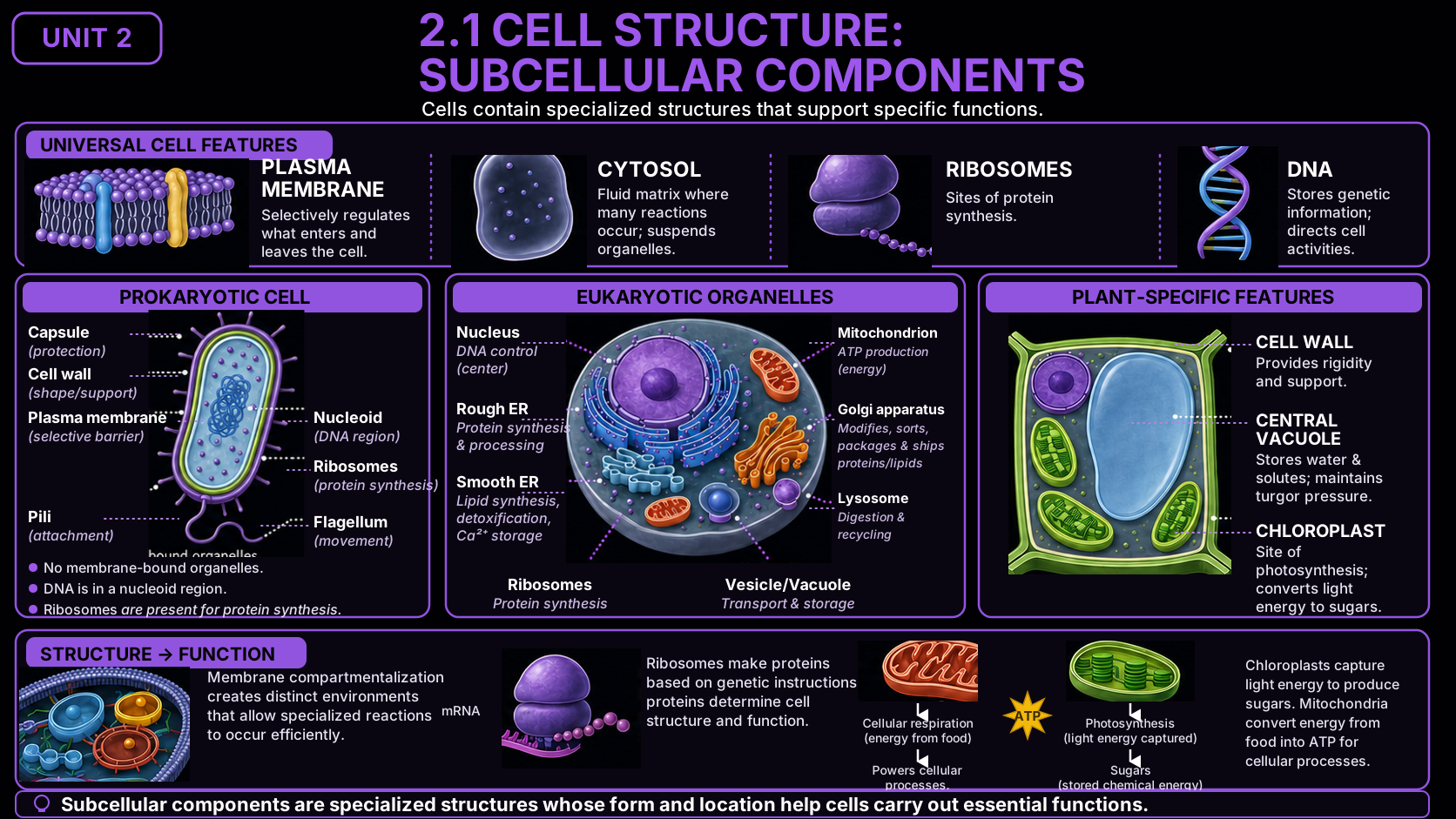
Key ideas · the subcellular components
Nucleus — a double-membrane vault holding the cell's DNA; the nucleolus inside builds ribosome parts.
Ribosomes — the machines that translate mRNA into protein; free in the cytoplasm or bound to the ER.
Endoplasmic reticulum — a membrane network: rough ER (ribosome-studded) makes and folds proteins, smooth ER builds lipids and detoxifies.
Golgi apparatus — stacked membrane sacs that modify, tag, sort, and ship proteins and lipids.
Mitochondria — double-membraned sites of cellular respiration; the folded inner membrane makes most of the cell's ATP.
Chloroplasts — in plants and algae only; capture light and run photosynthesis on stacked internal membranes.
Lysosomes & vacuoles — lysosomes digest and recycle worn parts; vacuoles store water, ions, and waste (the large central vacuole gives plant cells turgor).
Cell wall vs. plasma membrane — every cell has a selective membrane; plants, fungi, and many prokaryotes add a rigid wall outside it for support and protection.
Cytoskeleton — protein filaments that hold the cell's shape, anchor organelles, and move cargo.
Prokaryote vs. eukaryote — prokaryotes lack a nucleus and membrane-bound organelles; eukaryotes compartmentalize their chemistry inside them.
The common mistake here is treating the list of parts as a set of loose labels: knowing that "mitochondria make ATP" without picturing where the organelle sits, what membrane it hides behind, or which cells even have one. When the parts float free of the cell, students place organelles in prokaryotes that never had them, confuse the cell wall with the membrane, or lose track of which components are plant-only. Every scenario in this topic asks you to locate each component, say what it does, and know which cells carry it.
The work
3 ways in · any order
Lesson
Cell Structure: Subcellular Components
›
A guided tour of the parts that make up a cell — nucleus, ribosomes, ER, Golgi, mitochondria, chloroplasts, lysosomes, vacuoles, membrane and wall, and the cytoskeleton — and where each one sits. The lesson walks the ways students turn organelles into loose labels, then closes with a ten-scenario skill check: name each component, its job, and which cells actually have it.
Diagnostic
10-item topic check
›
Ten items on the subcellular components: what each part does (U2-BIO1), which components are membrane-bound and which are bare complexes of RNA and protein (U2-BIO6), telling the cell wall from the plasma membrane (U2-BIO4), which components are plant-only (U2-BIO5), and which organelles a prokaryote lacks — without treating it as an empty bag (U2-BIO3). Take it cold to surface which parts are still loose labels, or after the lesson to confirm they hold.
Targeted Practice
Drill a single misconception
›
Pick one of the failure modes you missed and drill it on its own. The round is adaptive: two correct in a row clears the misconception and moves you to the next.