
Plasma Membranes
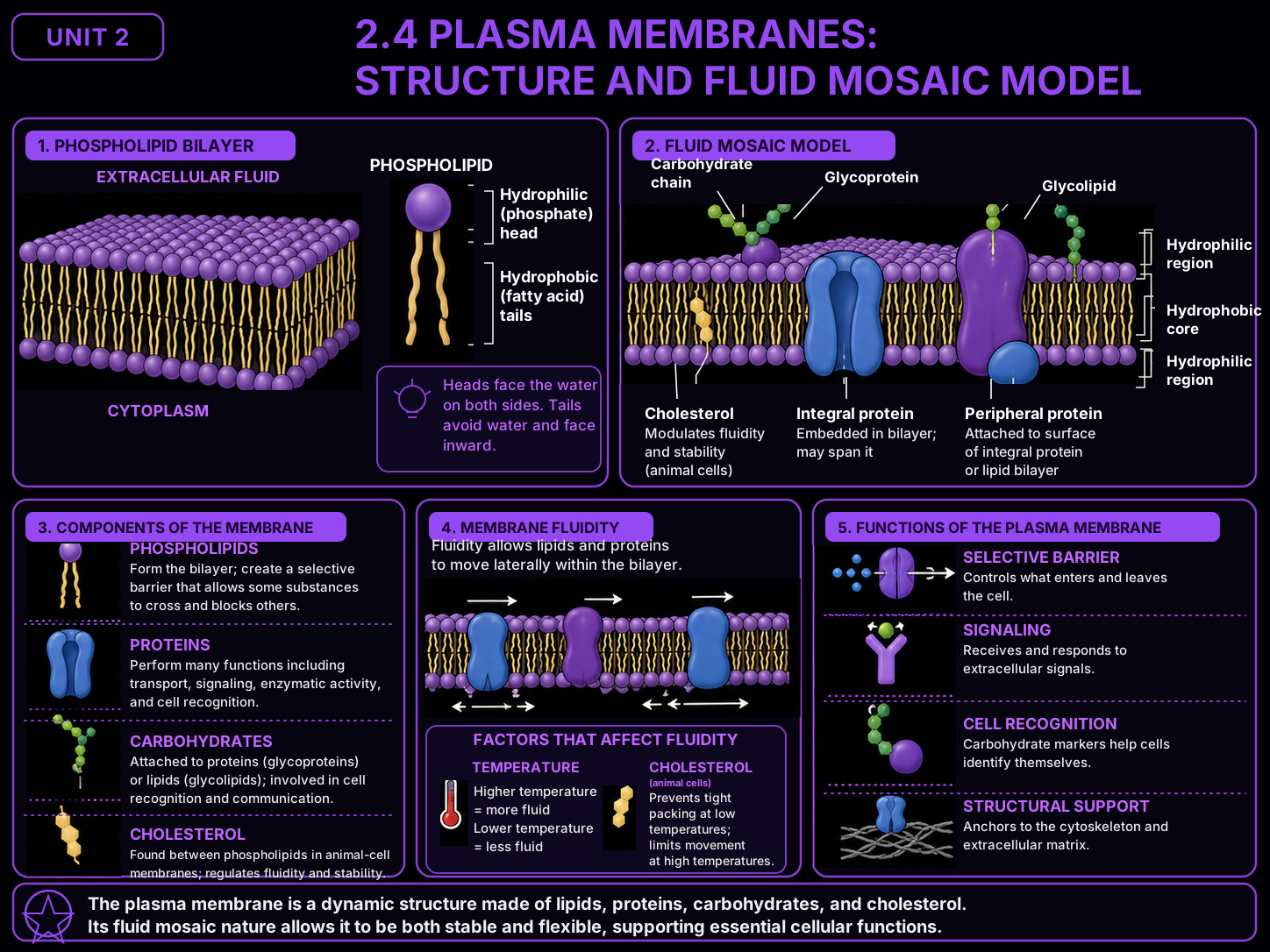
The plasma membrane is not a solid wall. It is a fluid mosaic: a double layer of phospholipids whose hydrophilic heads face the watery world on both sides and whose hydrophobic tails meet in the middle, hidden from water. Because each phospholipid is amphipathic — one end drawn to water, the other repelled — the bilayer assembles itself, and it stays fluid. Lipids and the proteins set into them drift laterally, so the membrane behaves like a two-dimensional liquid rather than a fixed structure.
Set into that fluid sheet is the mosaic. Integral proteins span the whole bilayer, their hydrophobic midsections in the core and hydrophilic ends in the water; peripheral proteins rest against one surface. Cholesterol wedges among the tails, buffering how fluid the membrane is across temperatures. And sugar chains on glycoproteins and glycolipids face outward from the extracellular surface, giving the cell its identity. Every one of these parts sits where it does because its structure fits the job it does there.
Interactive · Membrane Builder
Build a correct bilayer — heads to the water, tails inward — then set proteins, cholesterol, and surface sugars in place and press Fluidity to watch the mosaic drift. A membrane you assemble, not a diagram you memorize.
Membrane Builder · Open the full sandbox →The common mistake here is picturing the membrane as a static solid wall (U2-BIO8) — a fixed barrier rather than a 2-D fluid its parts move through. Two related errors follow: getting the bilayer backwards, forgetting that the heads face the water on both sides while the tails meet in the middle (U2-BIO9), and treating the embedded components as interchangeable decorations instead of parts whose structure fits a specific role (U2-BIO1). Every scenario in this topic asks the same thing — say why a part sits where it does, and why a membrane that flows works the way a wall never could.
The work
3 ways in · any order
Lesson
Plasma Membranes
›
The plasma membrane is a fluid mosaic, not a solid wall. The lesson walks the ways students freeze the membrane into a fixed barrier, flip the bilayer's heads and tails, and treat proteins, cholesterol, and surface sugars as interchangeable parts, then closes with a ten-scenario applet: assemble a working membrane and say why each part sits where it does.
Diagnostic
10-item topic check
›
Ten items on the fluid-mosaic membrane: whether it flows or stands still (U2-BIO8), how the bilayer's heads and tails face the water (U2-BIO9), and why each embedded part — protein, cholesterol, surface sugar — sits where it does (U2-BIO1). Take it cold to surface which ideas are still shaky, or after the lesson to confirm they hold.
Targeted Practice
Drill a single misconception
›
Pick one of the failure modes you missed and drill it on its own. The round is adaptive: two correct in a row clears the misconception and moves you to the next.