
Cell Structure and Function
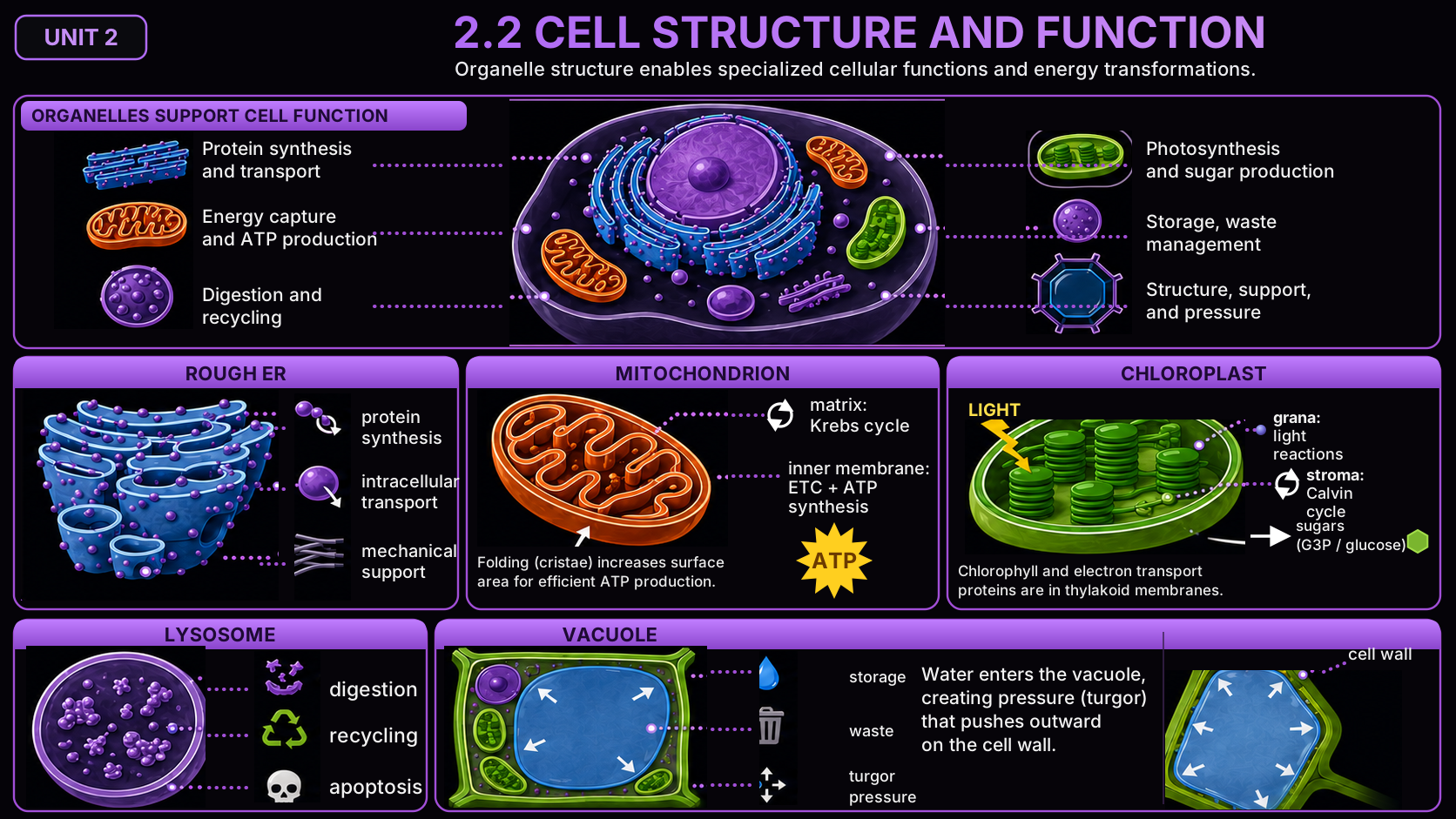
A cell is not a bag of interchangeable parts. Each organelle is built for the job it does, and its structure is the reason it can do that job at all. The mitochondrion's inner membrane folds into cristae — a vast surface packed with the machinery of respiration — because more membrane means more ATP. The rough endoplasmic reticulum is studded with ribosomes because it makes and ships proteins. Flatten the cristae or strip the ribosomes and the function goes with the shape. Structure predicts function, and function reveals structure.
Read the logic in either direction. Given a structure, you can often say what it must do: a folded, high-surface-area membrane is built for reactions on that surface; a network of tubes and sacs is built to sort and route. Given a function, you can predict the structure it demands: a cell that secretes heavily will be rich in Golgi and ER; one that moves will hold many mitochondria near the machinery it powers. This structure–function relationship is one of biology's organizing ideas, and it runs from the whole organelle down to the arrangement of a single membrane.
Interactive · Structure–Function Matcher
Match each organelle's structure to the function it makes possible, then reason backward from a job to the structure it requires. Structure on one side, function on the other — and the link between them.
Structure–Function Matcher · Open the full sandbox →The common mistake here is the structure–function disconnect: memorizing a list of organelles and their jobs as unrelated facts, so the shape and the function float free of each other. When that link is broken, a folded inner membrane is just a picture rather than the reason a mitochondrion makes so much ATP, and a prediction that should follow from structure becomes a fact to be recalled. Every scenario in this topic asks the same thing — say why the structure produces the function, not just which organelle does what.
The work
3 ways in · any order
Lesson
Cell Structure and Function
›
Every organelle's structure is the reason it can do its job. The lesson walks the ways students memorize organelles as disconnected facts and lose the link between shape and function, then closes with a ten-scenario applet: trace each cellular job back to the structure that makes it possible and say why the two go together.
Diagnostic
10-item topic check
›
Ten items on the structure–function relationship (U2-BIO1): reading an organelle's job from its structure, predicting the structure a given function demands, and catching the moments where shape and function get treated as unrelated facts. Take it cold to surface which links are still broken, or after the lesson to confirm they hold.
Targeted Practice
Drill a single misconception
›
Pick one of the failure modes you missed and drill it on its own. The round is adaptive: two correct in a row clears the misconception and moves you to the next.