
Cell Size
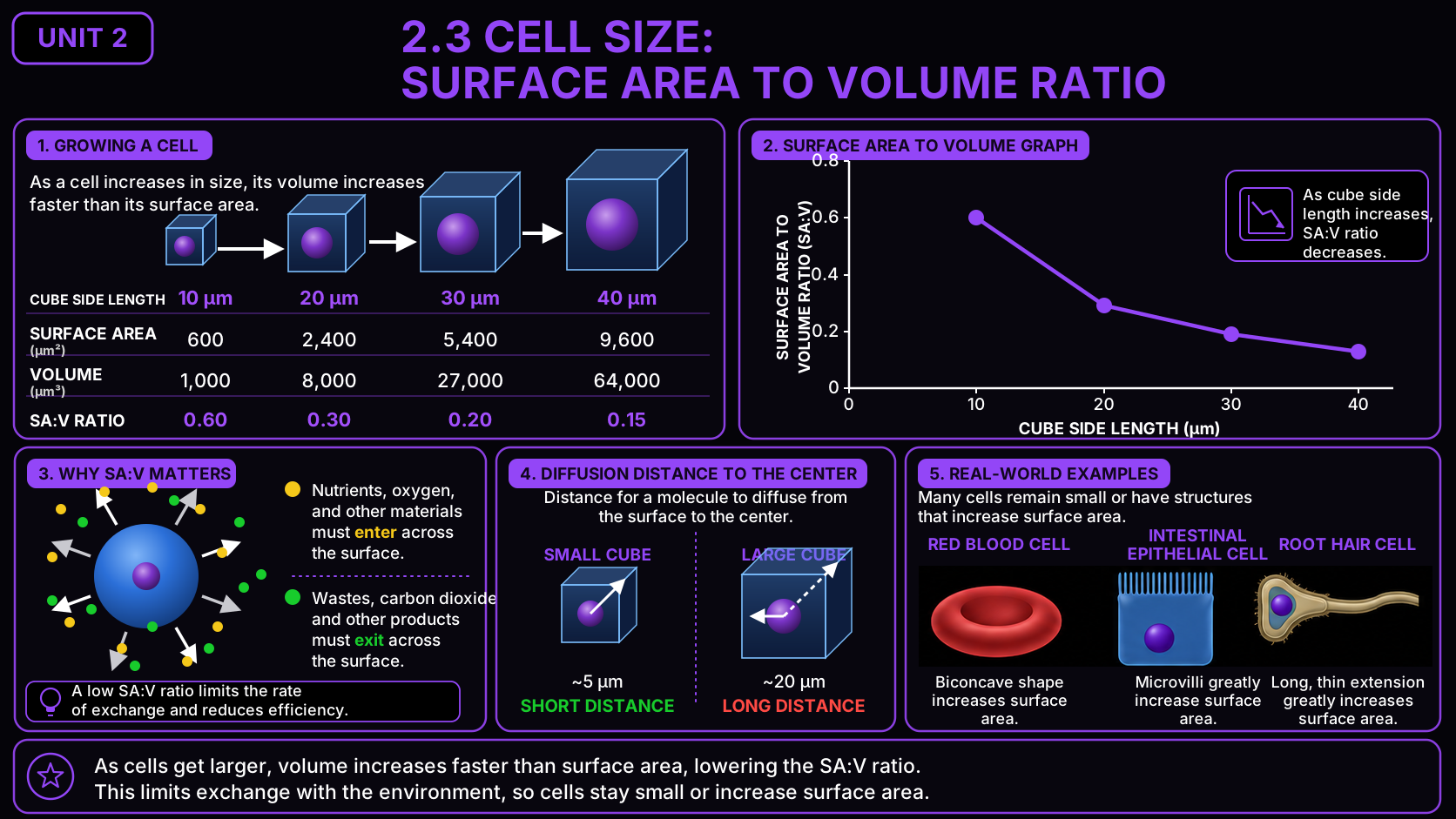
Cells stay small for a reason rooted in geometry. Everything a cell needs — oxygen, nutrients, waste removal — has to cross its surface, the plasma membrane. Everything it must supply — the whole hungry interior — lives in its volume. As a cell grows, those two quantities do not scale together. Volume grows with the cube of the radius while surface area grows only with the square, so the bigger the cell gets, the more interior each patch of membrane has to serve. Past a point the surface simply cannot exchange materials fast enough to keep the inside alive.
The number that captures this is the surface-area-to-volume ratio (SA:V). Double a cube's edge and its surface area goes up 4×, but its volume goes up 8× — so the SA:V ratio is cut in half. A high SA:V means plenty of membrane per unit of interior and fast exchange; a low SA:V means a starved core. This is why cells divide rather than balloon, and why cells that need heavy exchange — a gut lining cell, a root hair — evolve folds, villi, and long thin shapes that push surface area back up without adding bulk.
Interactive · Surface Area / Volume Lab
Grow the cell and watch surface area, volume, and the SA:V ratio move against each other. Volume races ahead, the ratio collapses, and the interior the membrane can supply falls behind — the geometric reason cells stay small.
Surface Area / Volume Lab · Open the full sandbox →The common mistake here is treating surface and volume as if they scale together: assuming a cell twice as wide simply does twice as much of everything, so getting bigger is a free win. It is not. Because volume outruns surface, growth steadily lowers the SA:V ratio and the exchange the cell depends on falls behind demand (U2-BIO7). Every scenario in this topic asks the same thing — track how surface area and volume scale differently, and reason from the ratio to whether the cell can still supply itself.
The work
3 ways in · any order
Lesson
Cell Size
›
Cells stay small because volume outgrows surface area. The lesson walks the ways students assume surface and volume scale together and miss why growth starves the interior, then closes with a ten-scenario applet: compute how SA:V changes as a cell grows and reason from the ratio to whether exchange can keep up.
Diagnostic
10-item topic check
›
Ten items on the surface-area-to-volume ratio (U2-BIO7): computing how SA:V changes as a cell grows, predicting when exchange can no longer keep up with the interior, and catching the moments where surface and volume get treated as if they scale together. Take it cold to surface which links are still broken, or after the lesson to confirm they hold.
Targeted Practice
Drill a single misconception
›
Pick one of the failure modes you missed and drill it on its own. The round is adaptive: two correct in a row clears the misconception and moves you to the next.