
Membrane Transport
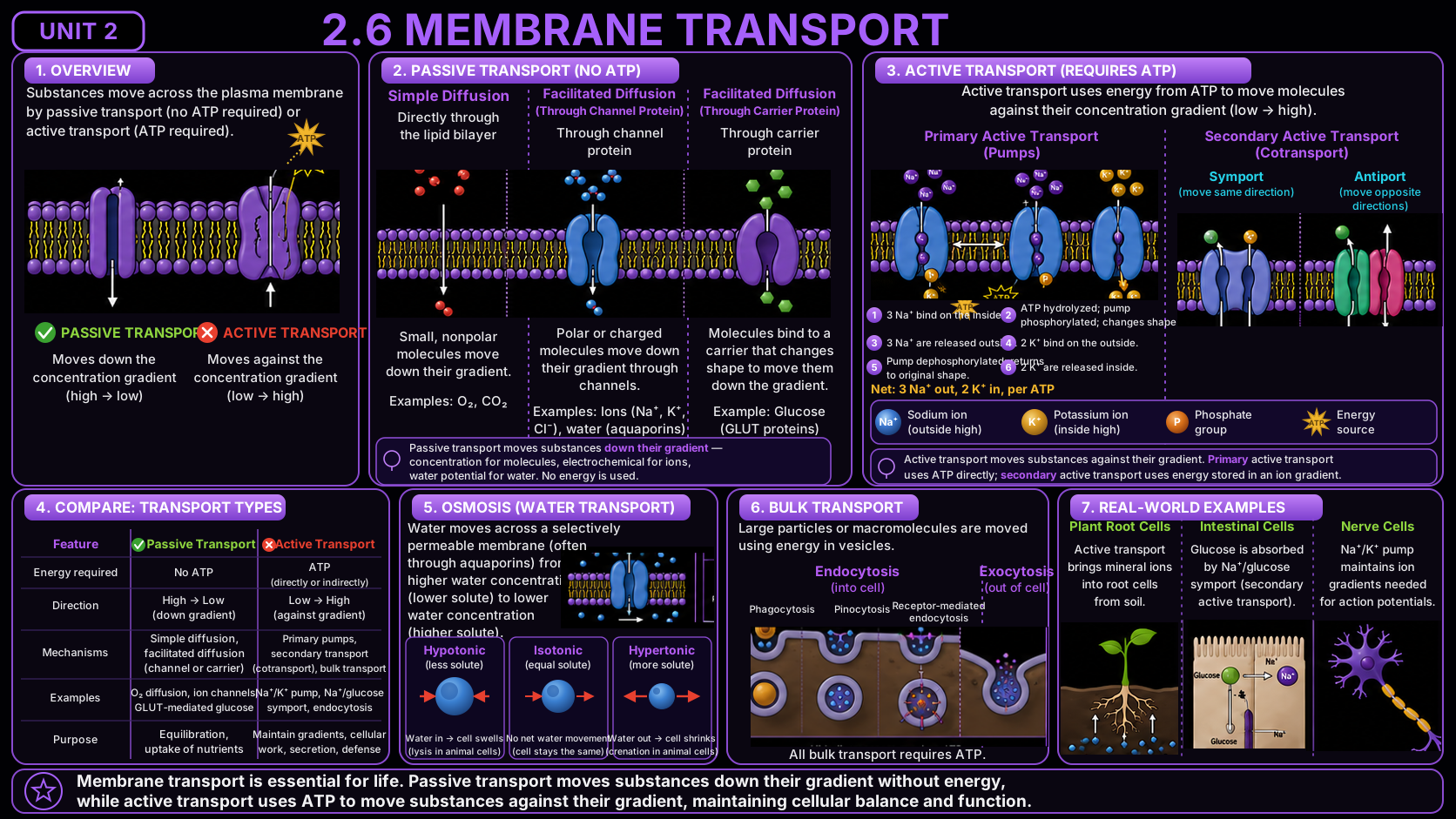
The cell membrane is a gatekeeper, not a wall. What crosses it, and how, depends on the substance and on which way the concentration gradient points. Small nonpolar molecules slip through the lipid bilayer directly; ions and larger polar molecules need a protein channel or carrier to get across. The organizing question is always the same: is the cell moving something down its gradient, from high to low, or up it, from low to high? The answer decides whether the trip is free or has to be paid for.
Passive transport runs down the gradient and costs the cell nothing — simple diffusion, osmosis, and facilitated diffusion through a channel all ride the gradient the way water runs downhill. Active transport goes the other way, pumping a substance against its gradient, and that direction is exactly why it demands energy: the cell spends ATP to move things where diffusion never would, as the sodium–potassium pump does when it drives ions uphill on both sides at once. Follow the gradient and you can predict the mode; name the mode and you can predict whether ATP is on the bill.
Interactive · Transport Modes
Set a gradient and pick a substance, then watch which mode moves it across the membrane — and when the cell has to spend ATP to push against the flow. Passive down the gradient, active against it, with the energy cost made visible.
Transport Modes · Open the full sandbox →The common mistake here is the direction-versus-energy mix-up: assuming any movement across the membrane must cost energy, or that a molecule crossing through a protein means active transport. Facilitated diffusion uses a protein but is still passive — the gradient does the work, not ATP. What makes transport active is not the channel and not the speed; it is the direction. Every scenario in this topic asks the same thing — decide which way the gradient points first, and let that tell you whether the cell pays.
The work
3 ways in · any order
Lesson
Membrane Transport
›
Whether a substance crosses the membrane for free or on the cell's dime comes down to which way the gradient points. The lesson walks the ways students assume all transport costs energy or read a channel as proof of active transport, then closes with a ten-scenario applet: decide the direction first, then say whether ATP is spent and why.
Diagnostic
10-item topic check
›
Ten items on membrane transport: reading the gradient's direction, separating passive movement from active transport, and catching the active-transport traps where energy and direction get confused (U2-BIO2, U2-BIO10, U2-BIO11, U2-BIO12). Take it cold to surface which links are still broken, or after the lesson to confirm they hold.
Targeted Practice
Drill a single misconception
›
Pick one of the failure modes you missed and drill it on its own. The round is adaptive: two correct in a row clears the misconception and moves you to the next.