
Origins of Cell Compartmentalization
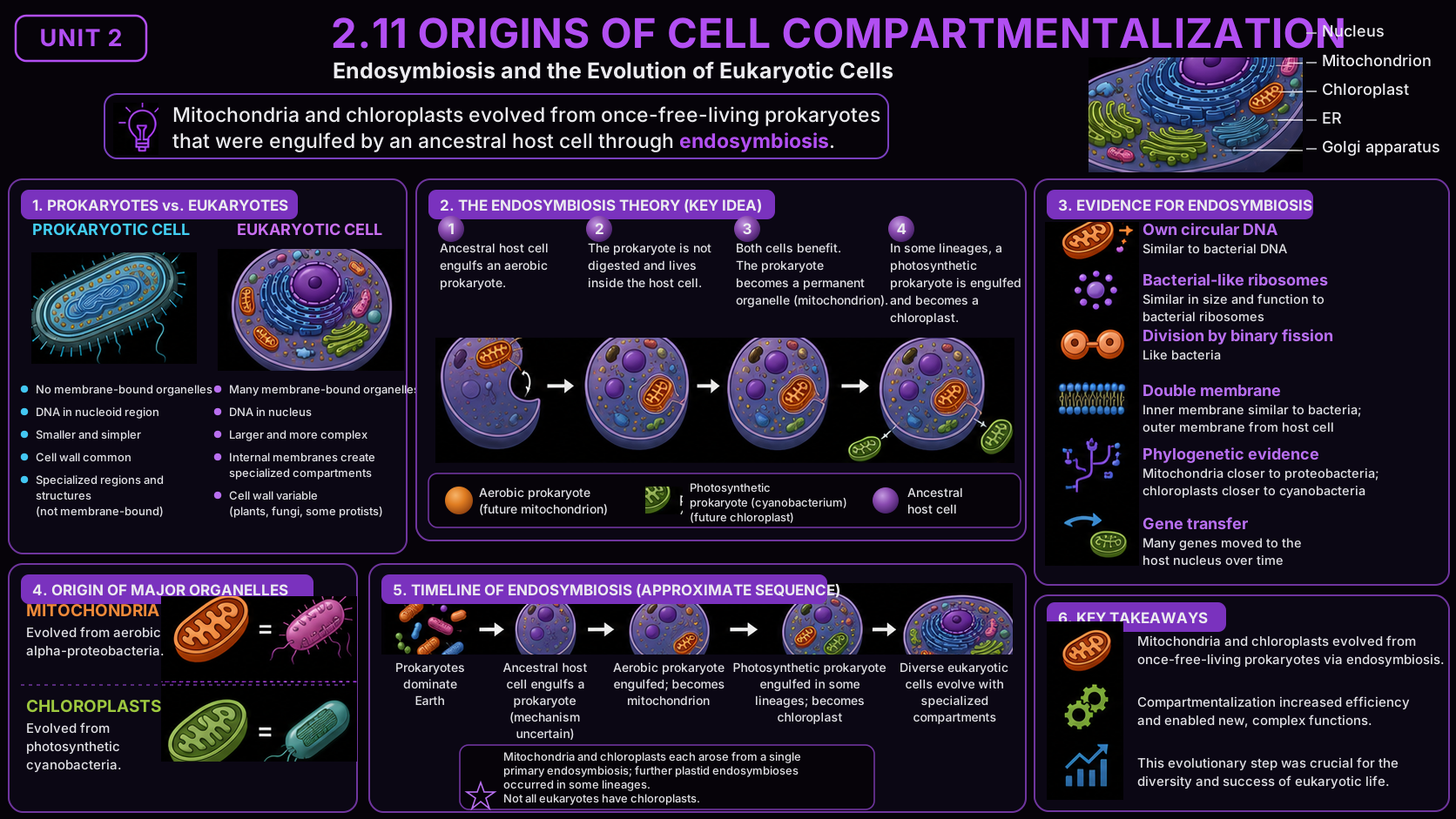
Two of the eukaryotic cell's most important organelles were once free-living cells in their own right. The endosymbiotic theory holds that mitochondria and chloroplasts descend from prokaryotes that were engulfed by a larger ancestral host cell — and instead of being digested, they stayed. An aerobic bacterium taken up by that host became the mitochondrion; a photosynthetic cyanobacterium, taken up later in the lineage that became plants and algae, became the chloroplast. Compartmentalization did not have to be built from scratch. In these two cases it was acquired, one whole cell absorbed into another.
The evidence is written into the organelles themselves. Mitochondria and chloroplasts carry their own small, circular DNA — the arrangement bacteria use, not the linear chromosomes of the nucleus. They make their own proteins on ribosomes that resemble bacterial ribosomes more than the cell's own. They are wrapped in a double membrane, the inner one a relic of the original prokaryote and the outer one from the host's engulfing vesicle. And they divide on their own by a fission-like process, independent of the cell's division. Each trait is a fingerprint left by a former guest.
Interactive · Endosymbiosis
Walk an engulfed prokaryote from meal to organelle, then test each trait — circular DNA, bacterial ribosomes, a double membrane, independent division — as evidence that a mitochondrion or chloroplast was once a cell of its own.
Endosymbiosis · Open the full sandbox →The common mistake here is treating the theory as a story about the whole cell rather than these two organelles: assuming the nucleus, endoplasmic reticulum, or Golgi arose the same way. They did not — those compartments formed by infolding of the cell's own membrane, and they carry none of the endosymbiotic fingerprints. Only mitochondria and chloroplasts have their own genome, their own ribosomes, and a double membrane, because only they began as separate cells. Every scenario in this topic asks you to read the evidence and say which compartments the endosymbiotic theory actually explains — and why.
The work
3 ways in · any order
Lesson
Origins of Cell Compartmentalization
›
Mitochondria and chloroplasts began as free-living prokaryotes engulfed by a host cell. The lesson walks the ways students overreach the theory to the nucleus and other membrane-bound organelles, then closes with a ten-scenario applet: read each fingerprint — circular DNA, bacterial ribosomes, a double membrane, independent division — and say which compartments endosymbiosis explains and why.
Diagnostic
10-item topic check
›
Ten items on the endosymbiotic theory (U2-BIO18): reading circular DNA, bacterial-type ribosomes, and a double membrane as evidence of a former free-living cell, and catching the moment the theory gets overextended to the nucleus and other infolded compartments. Take it cold to surface which links are still broken, or after the lesson to confirm they hold.
Targeted Practice
Drill a single misconception
›
Pick one of the failure modes you missed and drill it on its own. The round is adaptive: two correct in a row clears the misconception and moves you to the next.