 Mistake Master
Structure and function of biological macromolecules
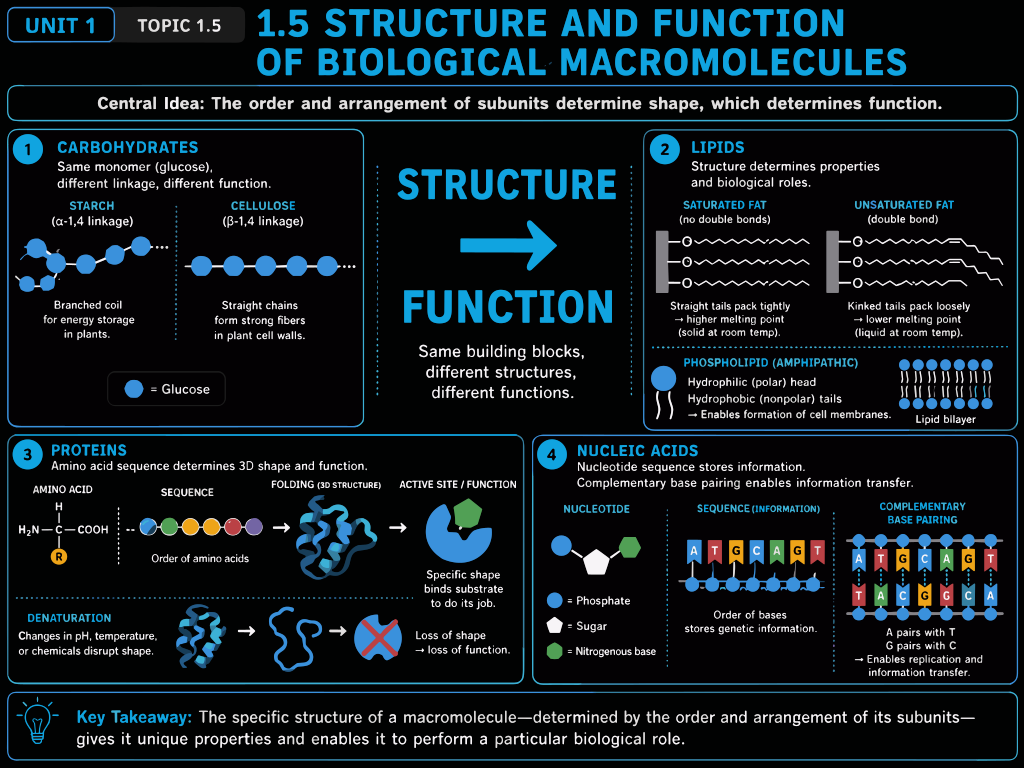
A protein is not just a list of amino acids — it is a chain that folds into a precise three-dimensional shape, and that shape is what does the job. The order of amino acids (the sequence) dictates how the chain folds; the folding dictates the function. Change the folding and you change what the molecule can do. Get one idea straight and the rest of this topic falls into place: the sequence is not the shape — the sequence determines the shape.
§1
The four levels of protein structure.
▸
Proteins are the workhorses of the cell, and their jobs depend entirely on their three-dimensional shape. That shape is built up in four levels, each one setting the stage for the next.
Primary (1°) structure is the sequence: the exact order of amino acids strung together by covalent peptide bonds. This is a one-dimensional list, like beads threaded on a string. Nothing about it is folded yet — but the identities and order of those beads contain all the information the chain needs to fold correctly.
Secondary (2°) structure is local coiling and pleating: the α-helix and the β-pleated sheet. These regular patterns are held together by hydrogen bonds between atoms of the polypeptide backbone — not the side chains. Note the key point already: the bonds that hold a helix are weak hydrogen bonds, while the peptide bonds along the backbone are strong and covalent.
Tertiary (3°) structure is the overall three-dimensional fold of a single polypeptide. It comes from interactions among the R-groups (the side chains): hydrophobic side chains cluster away from water, oppositely charged side chains form ionic bonds, some form hydrogen bonds, and certain sulfur-containing side chains form covalent disulfide bridges. This level is where a chain becomes a working molecule with, say, an enzyme's active site.
Quaternary (4°) structure exists only in proteins built from two or more separate polypeptide chains (subunits) fitted together — hemoglobin, with its four subunits, is the classic example. Not every protein has this level.
§2
Sequence → folding → function.
▸
This is the through-line of the entire topic, and the single idea most worth getting right. It is a chain of causes:
- The sequence determines the folding. The order of amino acids (primary structure) fixes which side chains sit where, and those side-chain interactions drive the chain into one specific fold. A given sequence, in the cell's normal conditions, folds into the same shape every time — the fold is not random and not arbitrary.
- The folding determines the function. A protein works by its shape: an enzyme's active site must match its substrate, an antibody must fit its target, a channel must form a pore of the right size. The three-dimensional shape is the tool.
Now the trap to defuse before it forms. The sequence is not the shape. Primary structure is a one-dimensional list of amino acids; the shape is the three-dimensional fold that list produces. Saying “the sequence is the shape” collapses two different levels into one. The correct statement is causal: the sequence determines the shape.
Because of this chain, a change as small as a single amino acid can matter enormously. In sickle-cell hemoglobin, swapping one amino acid for another changes how the chain folds, which changes the protein's behavior and causes disease. One bead in the string, and the whole tool can break. That is structure–function reasoning at its sharpest: change the structure and you change the function.
§3
The terms you'll meet.
▸
Quick reference card. Keep the four structural levels straight, and keep the sequence separate from the shape it produces.
§4
What builds the fold — and what breaks it.
▸
The backbone: peptide bonds, built by dehydration. Amino acids are linked into the primary chain by dehydration synthesis (condensation): as each peptide bond forms, a molecule of water is removed. To take a protein back apart — digestion, for instance — the reverse reaction, hydrolysis, adds water to break each peptide bond. Building removes water; breaking adds it. These peptide bonds are strong and covalent, and they define the primary structure.
What actually drives folding: the R-groups. Once the chain exists, it folds because of its side chains. Hydrophobic side chains huddle together in the protein's interior, away from water. Oppositely charged side chains attract as ionic bonds. Some side chains form hydrogen bonds with each other, and certain sulfur-containing ones form covalent disulfide bridges. These R-group interactions are the reason a specific sequence produces a specific tertiary shape. The side chains are the whole point — they are not inert filler, and a protein's function cannot be read off the backbone alone.
Two kinds of bond, again. Notice how folding leans on weak interactions — hydrogen bonds and ionic attractions — layered on top of the strong covalent peptide backbone. Secondary structure is held entirely by weak backbone hydrogen bonds. This split is what makes the next idea work.
Denaturation: folding lost, backbone kept. When a protein is heated or the pH swings, the weak interactions that hold its fold together are disrupted, and the chain unravels — it denatures. Crucially, the strong covalent peptide bonds are not broken: the amino acid sequence — the primary structure — survives intact. Denaturation destroys the shape, not the sequence. That is exactly why some denatured proteins can refold to their original form once normal conditions return: the instructions (the sequence) were never lost. A fried egg is the everyday version — heat unfolds the egg-white proteins into a tangled solid, but it does not chop their chains into a new sequence.
Structure → function, from top to bottom. The sequence sets the fold; the fold makes the tool. Denature the fold and the tool stops working — a cooked enzyme can no longer bind its substrate because its active site is gone, even though every amino acid is still present in the same order. Change the structure at any level and you change the function. That single principle ties this whole topic together.
§5
3 mistakes that cost real points.
▸
“The amino acid sequence is the protein's shape.”
The sequence (primary structure) is a one-dimensional list of amino acids. The shape is the three-dimensional fold that list produces. They are different levels of structure. The sequence does not equal the shape — it determines the shape by fixing which side chains interact.
Fix. Use the causal word every time: sequence determines folding, folding determines function. If a question treats “the sequence” and “the shape” as the same thing, it is wrong.
“Denaturation breaks the primary structure (the peptide bonds).”
Denaturation disrupts the weak interactions — hydrogen bonds, ionic bonds, hydrophobic clustering — that hold a protein's fold. It does not break the strong covalent peptide bonds of the backbone. The amino acid sequence survives; only the folded shape is lost. That is precisely why some proteins can refold when normal conditions return.
Fix. Denaturation = shape lost, sequence kept. Peptide bonds are broken by hydrolysis (digestion), not by heat or pH. Never say denaturation “scrambles the sequence.”
“The R-groups (side chains) don't matter — only the backbone does.”
The R-groups are what fold the protein and what give it function. Hydrophobic clustering, ionic bonds, hydrogen bonds, and disulfide bridges all happen between side chains. Two chains with the same length but different side chains fold and behave completely differently. The side chains are not decoration.
Fix. When a question asks what drives tertiary structure or sets a protein's behavior, look to the R-groups. The backbone provides the thread; the side chains do the chemistry.
§6
Skill Check.
▸
Ten scenarios. Pick the chips that match your answer, then check. A scenario marks complete the first time every part is right. Progress saves on this device.