
Cellular Respiration
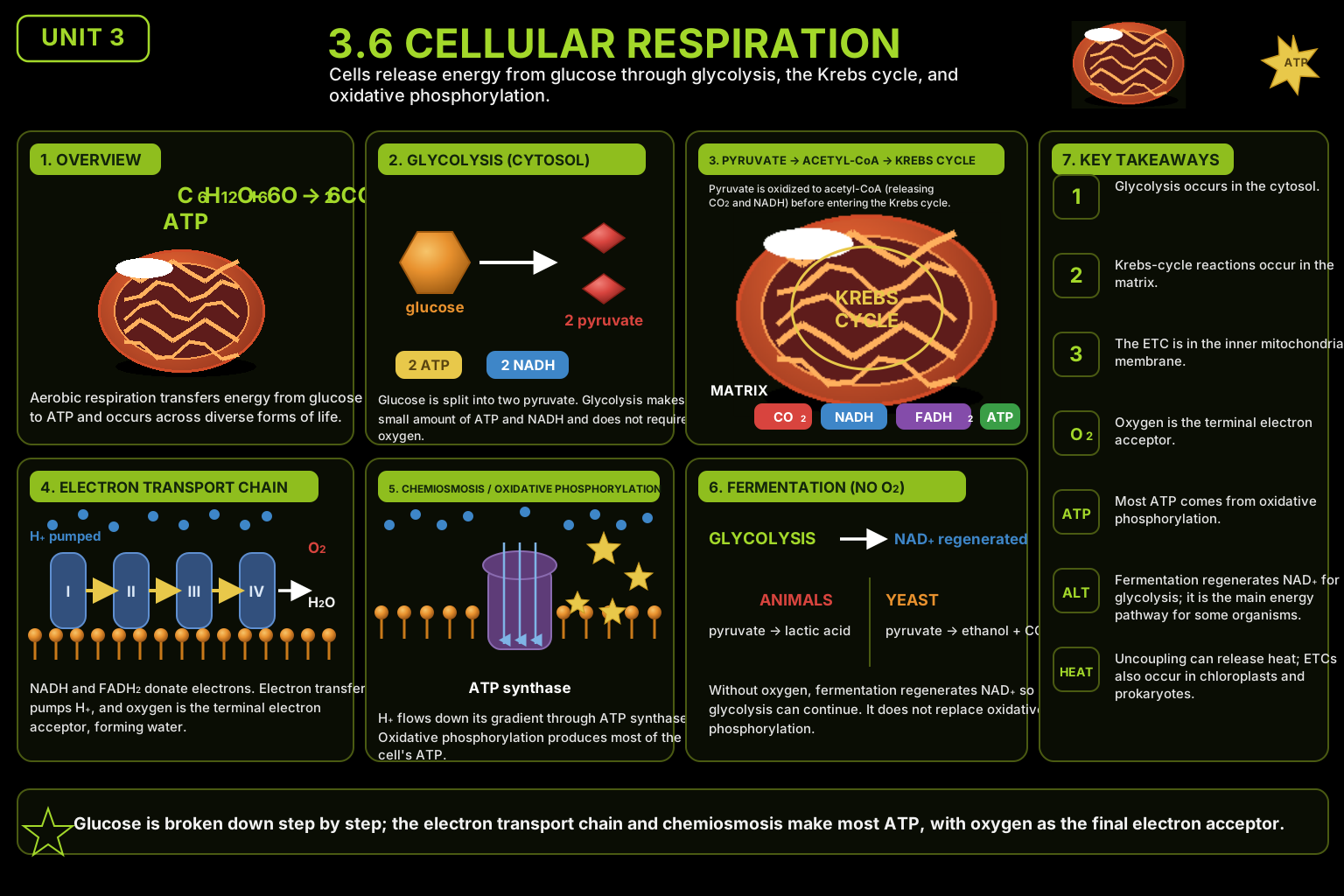
▶︎ Watch it animatedinteractive step-through · ~3 min · optionalCellular respiration is how a cell turns the chemical energy locked in glucose into ATP, the currency it can actually spend. It runs in three connected stages. Glycolysis, in the cytoplasm, splits glucose into two pyruvate and nets a small amount of ATP without needing oxygen. The Krebs cycle, in the mitochondrial matrix, finishes oxidizing those carbons to CO2 and loads high-energy electrons onto carriers. And the electron transport chain, across the inner mitochondrial membrane, uses those electrons to pump protons and drive the synthesis of the bulk of the cell's ATP. Oxygen matters at the very end: it is the final electron acceptor, the thing the whole chain is passing electrons toward.
The word respiration is where the first confusion starts. Cellular respiration is not breathing. Breathing moves air into and out of lungs; cellular respiration is the chemistry happening inside every cell, mitochondrion by mitochondrion. Breathing supplies the oxygen and carries away the CO2, but the energy harvest itself is molecular, and it happens in a bacterium or a plant cell that has no lungs at all.
Interactive · Respiration
Trace a glucose through glycolysis, the Krebs cycle, and the electron transport chain — watch where carbon leaves as CO2, where electrons load onto carriers, and how the ATP tally climbs stage by stage. Cut off the oxygen and see the yield collapse to what fermentation alone can manage.
Respiration · Open the full sandbox →The rest of the mistakes cluster around the numbers and the oxygen. Without oxygen, most cells fall back on fermentation, which regenerates the carriers glycolysis needs but harvests far less ATP — only the small glycolytic net, not the large payoff of the electron transport chain. It is a common error to treat fermentation as an equally good backup, or to think glycolysis alone is where most of the ATP comes from; the bulk of the yield depends on the oxygen-fed chain at the end. Every scenario in this topic asks you to reason from which stage is running to how much energy a cell can actually get. The failure modes it targets: U3-BIO2, U3-BIO10, U3-BIO11, U3-BIO14, U3-BIO15, and U3-BIO16.
The work
3 ways in · any order
Lesson
Cellular Respiration
›
Cellular respiration harvests ATP from glucose across three stages — glycolysis, the Krebs cycle, and the electron transport chain — with oxygen as the final electron acceptor. The lesson walks the ways students misread that pathway: confusing respiration with breathing, assuming glycolysis supplies most of the ATP, and treating fermentation as an equal-yield fallback. It closes with a ten-scenario applet that asks you to reason from which stage is running to how much energy a cell can get.
Diagnostic
10-item topic check
›
Ten items on cellular respiration — that respiration is cellular chemistry, not breathing (U3-BIO14); that energy is transformed rather than created, so the mitochondrion releases energy already held in glucose instead of manufacturing it (U3-BIO2, U3-BIO10); that plants respire too, continuously, not only at night (U3-BIO11, U3-BIO16); and that fermentation yields far less ATP (U3-BIO15). Take it cold to surface which of these are still tangled, or after the lesson to confirm they hold.
Targeted Practice
Drill a single misconception
›
Pick one of the failure modes you missed and drill it on its own. The round is adaptive: two correct in a row clears the misconception and moves you to the next.