
Enzyme Structure
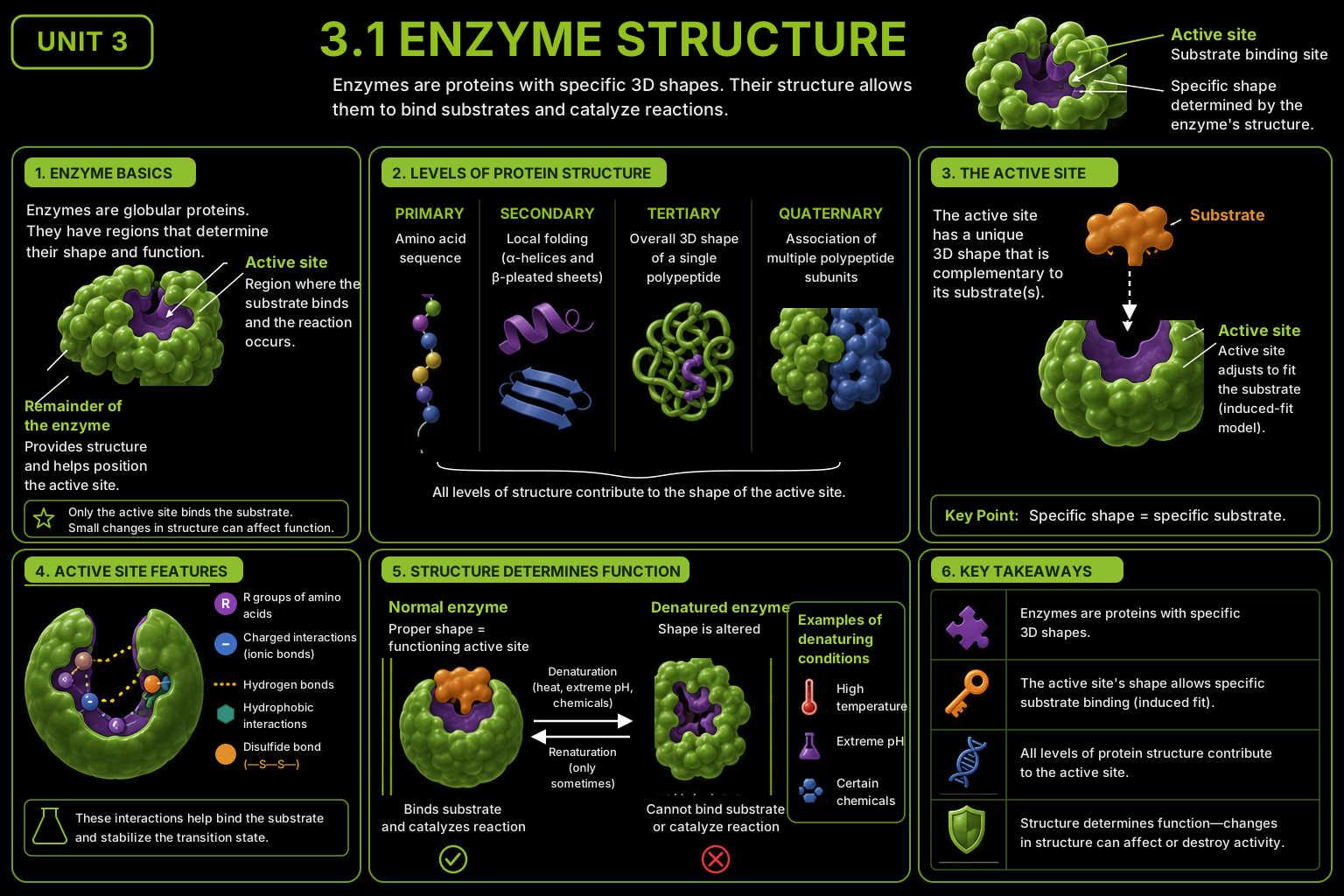
▶︎ Watch it animatedinteractive step-through · ~3 min · optionalAn enzyme is a protein whose shape is its function. Folded into a precise three-dimensional form, each enzyme carries a small pocket — the active site — whose contours, charges, and chemistry fit one particular substrate. That fit is why enzymes are specific: a given active site recognizes its substrate the way one contour matches one key, and a molecule of the wrong shape or chemistry simply doesn't bind. The active site is not just a hole in the protein; it is the reason the reaction happens at all.
The fit is also not rigid. When the right substrate arrives, the active site changes shape to close around it — the induced fit model — straining the substrate's bonds and lowering the energy barrier so the reaction proceeds faster. And once the products leave, the enzyme snaps back to its original form, unchanged. An enzyme is a catalyst: it speeds a reaction and comes out the other side ready to do it again, and again. It is not used up, and it is not part of the product.
Interactive · Active Site
Try to fit different substrates into the active site. Only the matching molecule binds — and watch the pocket flex to close around it (induced fit) before the enzyme releases the product and resets, ready to catalyze again.
Active Site · Open the full sandbox →The mistakes here all break the link between shape and behavior. One is treating the active site as a rigid lock-and-key, when real binding is induced fit — the site deforms to grip its substrate. Another is imagining that any substrate fits any enzyme, when specificity is the whole point: one active site, one substrate. And the most common of all is thinking an enzyme is consumed in the reaction. It isn't — a catalyst emerges unchanged and reusable. Every scenario in this topic asks you to reason from the enzyme's structure to what it can and cannot do.
The work
3 ways in · any order
Lesson
Enzyme Structure
›
An enzyme's active site is the reason it works — and the reason it works on only one substrate. The lesson walks the ways students misread that structure: the rigid lock-and-key picture, the idea that any substrate fits, and the belief that the enzyme is used up. It closes with a ten-scenario applet that asks you to reason from active-site structure to what the enzyme can do and why it stays reusable.
Diagnostic
10-item topic check
›
Ten items on enzyme structure — that enzymes are reusable catalysts, not consumed (U3-BIO1); that binding is induced fit, not a rigid lock-and-key (U3-BIO3); and that each active site is specific to one substrate rather than accepting any (U3-BIO4). Take it cold to surface which of these are still tangled, or after the lesson to confirm they hold.
Targeted Practice
Drill a single misconception
›
Pick one of the failure modes you missed and drill it on its own. The round is adaptive: two correct in a row clears the misconception and moves you to the next.