 Mistake Master
Cellular respiration
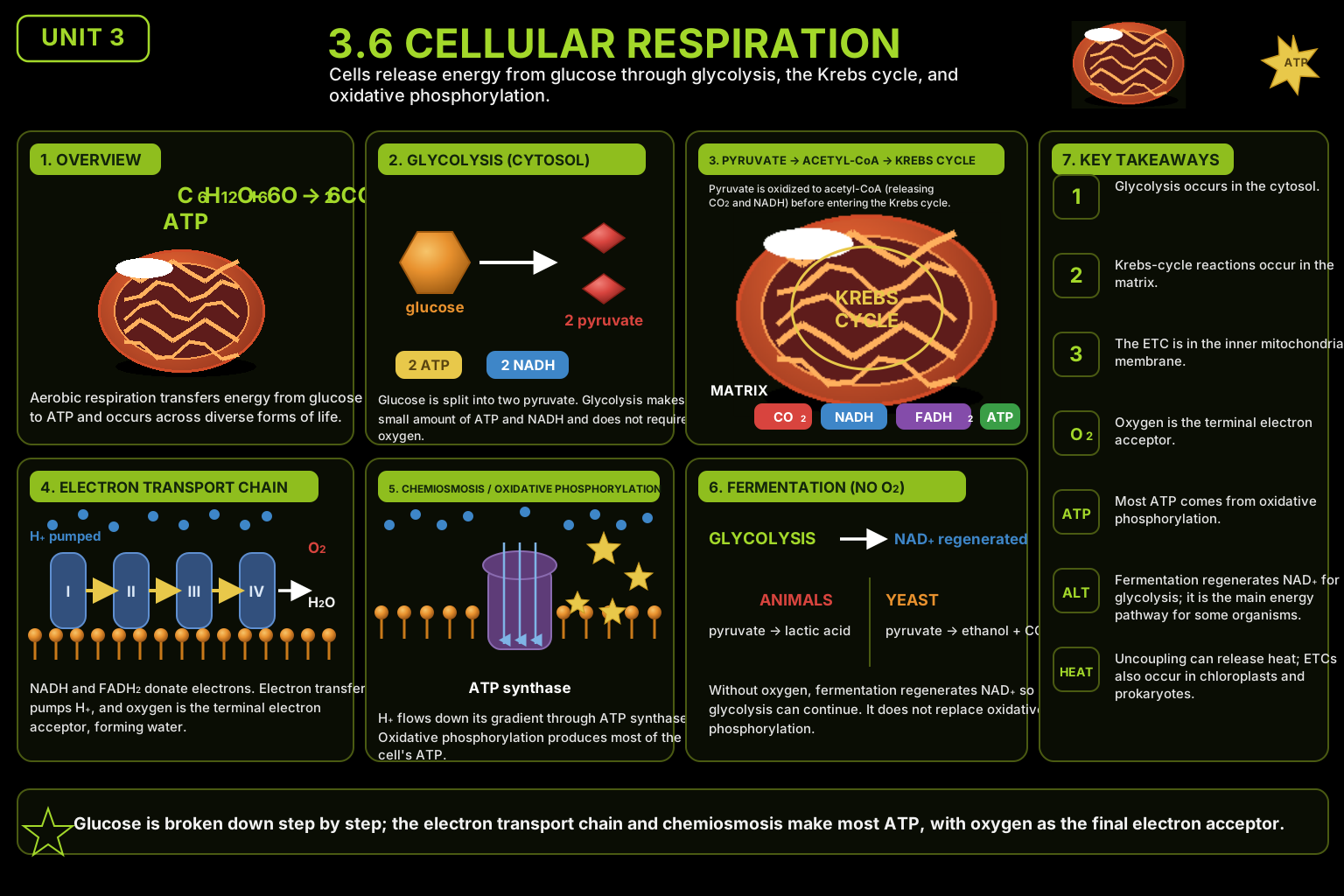
Cellular respiration is how a cell releases the energy stored in glucose and repackages it as ATP. In a eukaryotic cell with oxygen present it runs in three stages: glycolysis in the cytoplasm splits glucose into pyruvate; pyruvate oxidation and the Krebs cycle in the mitochondrial matrix strip out high-energy electrons; and the electron transport chain on the inner mitochondrial membrane uses those electrons to drive oxidative phosphorylation, which makes most of the ATP. It is a chemical process happening inside cells — not the same thing as breathing.
§1
The one big idea: respiration releases energy inside the cell.
▸
Cellular respiration is the set of chemical reactions a cell uses to release the energy stored in glucose and transfer it into ATP, the molecule the cell can actually spend. The energy was already there, locked in glucose's bonds. Respiration does not create that energy — it transforms it from one form (chemical bonds in food) into another (ATP, plus heat). Energy is conserved throughout; none is made from nothing and none is destroyed.
Notice the word “cellular.” Respiration is a chemical process that happens inside cells — in a eukaryotic cell, in the cytoplasm and at the mitochondria. It is not the same thing as breathing. Breathing (ventilation) moves air in and out of your lungs; cellular respiration is the biochemistry that burns glucose inside the cells themselves. Breathing supplies the O2 that respiration eventually uses, but the two are different levels of the story.
And it is very nearly everywhere. Glycolysis is essentially universal — virtually every cell runs it, yours right now and a plant's too, day and night. What varies is what happens next: not every cell even has mitochondria (prokaryotes don't, and neither do your mature red blood cells), and not every cell is continuously running aerobic respiration. Keep three questions in mind for the rest of the topic: where each stage happens, how much ATP it yields, and whether oxygen is available. Those three decide everything.
§2
The three stages — and where each one happens in a eukaryotic cell.
▸
In a eukaryotic cell with oxygen available, aerobic respiration runs glucose through three stages in order. Watch the location of each — the compartment matters as much as the chemistry. (These are eukaryotic addresses — cells without mitochondria are handled at the end of this section.)
- Glycolysis — in the cytoplasm. Glucose (a 6-carbon sugar) is split into two molecules of pyruvate (3 carbons each). This happens in the cytoplasm, outside the mitochondria, and needs no oxygen. It yields a small net amount of ATP (about 2) and some high-energy electrons carried by NADH.
- Pyruvate oxidation — entering the mitochondrion. Each pyruvate moves into the mitochondrial matrix, loses a carbon as CO2, and is attached to coenzyme A to form acetyl-CoA. More NADH is made. This is the bridge that connects glycolysis to the Krebs cycle.
- Krebs (citric acid) cycle — in the mitochondrial matrix. Acetyl-CoA is fed into a cycle that releases the remaining carbons as CO2 and loads up the electron carriers NADH and FADH2. Only a little ATP is made directly here; the real payoff is those loaded electron carriers.
- Electron transport chain — on the inner mitochondrial membrane. NADH and FADH2 drop their electrons into a chain of proteins embedded in the inner membrane. The energy released pumps H+ across the membrane, building a gradient that drives ATP synthase. Oxygen is the final electron acceptor, forming water. This stage — oxidative phosphorylation — makes the great majority of the ATP.
- The tally. Add it up and aerobic respiration yields roughly 30+ ATP per glucose — and the electron transport chain / oxidative phosphorylation is responsible for most of it. Glycolysis and the Krebs cycle contribute only a handful of ATP directly; their main job is delivering electrons to the chain.
Through-line: energy moves from glucose → electron carriers → the proton gradient → ATP. In a eukaryote each stage has a fixed address — cytoplasm, then matrix, then inner membrane — and the inner membrane is where the bulk of the ATP is finally made.
Cells without mitochondria. Those addresses are eukaryotic, not universal. Prokaryotes have no mitochondria at all: they run glycolysis and the Krebs cycle in the cytoplasm and hang their electron transport chain on the plasma membrane, pumping H+ across it instead of across an inner mitochondrial membrane. Same logic, different real estate. Closer to home, your mature red blood cells also lack mitochondria — they get their ATP from glycolysis alone. The compartment is a detail of the cell; the chemistry is the constant.
§3
The terms you'll meet.
▸
Quick reference card. For each term, read where it happens and what it contributes — location and ATP yield are the whole game.
§4
With oxygen vs. without: why fermentation yields so little ATP.
▸
Everything above assumes oxygen is available. That case — aerobic respiration — runs all three stages, sends electrons all the way down the transport chain to oxygen, and captures roughly 30+ ATP per glucose. The electron transport chain is the big earner precisely because O2 at the end pulls electrons through and keeps the whole chain running.
Without oxygen, the chain stalls. If there is no O2 to accept the electrons, the electron transport chain backs up: NADH has nowhere to unload, so it can't be recycled back to NAD+. Glycolysis needs NAD+ to keep going, so the whole process would grind to a halt — unless the cell has another way to regenerate it.
Fermentation is that workaround. Fermentation is an anaerobic pathway that regenerates NAD+ so glycolysis can continue. In your muscle cells pyruvate is converted to lactate; in yeast it becomes ethanol and CO2. Crucially, fermentation itself makes no additional ATP — its only job is to recycle NAD+. All the ATP comes from glycolysis, so the total is just the ~2 ATP from that first stage.
So the gap is huge, not small. Aerobic respiration generally yields much more ATP per glucose than fermentation. Roughly fifteen times more (~30+ ATP versus ~2). Fermentation is not “almost as good” — it is a low-yield pathway that lets a cell keep making a trickle of ATP without ever sending electrons to oxygen.
Why it exists at all. A little ATP fast is better than none. Sprinting muscles and oxygen-starved tissues fall back on fermentation to survive short bursts, and plenty of microbes live on it as their primary pathway. And the yield rule is a tendency, not a law about what cells will do: some cells ferment even when oxygen is plentiful, trading ATP per glucose for speed. Yield is one pressure on a cell, not the only one.
§5
3 mistakes that cost real points.
▸
“Cellular respiration is just breathing.”
This is the most common respiration error (code U3-BIO14). Students hear “respiration” and picture inhaling and exhaling. But breathing (ventilation) is your lungs moving air; cellular respiration is the biochemistry that releases energy from glucose inside the cells themselves. They operate at completely different scales. Breathing delivers the O2 that cellular respiration eventually uses in the electron transport chain and carries away the CO2 respiration produces — but supplying a reactant is not the same as being the reaction.
Fix. Ask “where does the ATP get made?” If your answer is “the lungs” you're describing breathing; the real action is inside the cell — at the mitochondria in a eukaryote, at the plasma membrane in a prokaryote.
“Fermentation gives about as much ATP as aerobic respiration.”
Students often assume the anaerobic route is roughly as productive (code U3-BIO15). It isn't — not even close. Fermentation makes no ATP of its own; it only regenerates NAD+ so glycolysis can keep running, so the entire yield is the ~2 ATP from glycolysis. Aerobic respiration captures ~30+ ATP because it also runs the Krebs cycle and, above all, the electron transport chain. Aerobic respiration generally yields much more ATP per glucose than fermentation — roughly a fifteen-fold difference, not a rounding error.
Fix. Anchor two numbers: fermentation ≈ 2 ATP, aerobic ≈ 30+. If you ever equate them, you've dropped the entire payoff of the electron transport chain.
“Mitochondria make energy” — and “plants only respire at night.”
Two linked slip-ups. First, mitochondria do not create energy (code U3-BIO10) — energy can't be created (code U3-BIO2). The mitochondrion releases energy already stored in glucose and repackages it as ATP; the total energy is conserved. Second, students think plants respire only in the dark, or don't respire at all and just “eat soil” (codes U3-BIO16, U3-BIO11). In fact plant cells respire around the clock, day and night. Plants photosynthesize and respire; in daylight photosynthesis simply runs alongside (and faster than) their ongoing respiration.
Fix. Say “mitochondria release energy,” never “make” it. And remember a plant does not clock out of respiration at sunrise — it respires day and night, like you do.
§6
Skill Check.
▸
Ten scenarios. Pick the chips that match your answer, then check. A scenario marks complete the first time every part is right. Progress saves on this device.