 Mistake Master
Photosynthesis
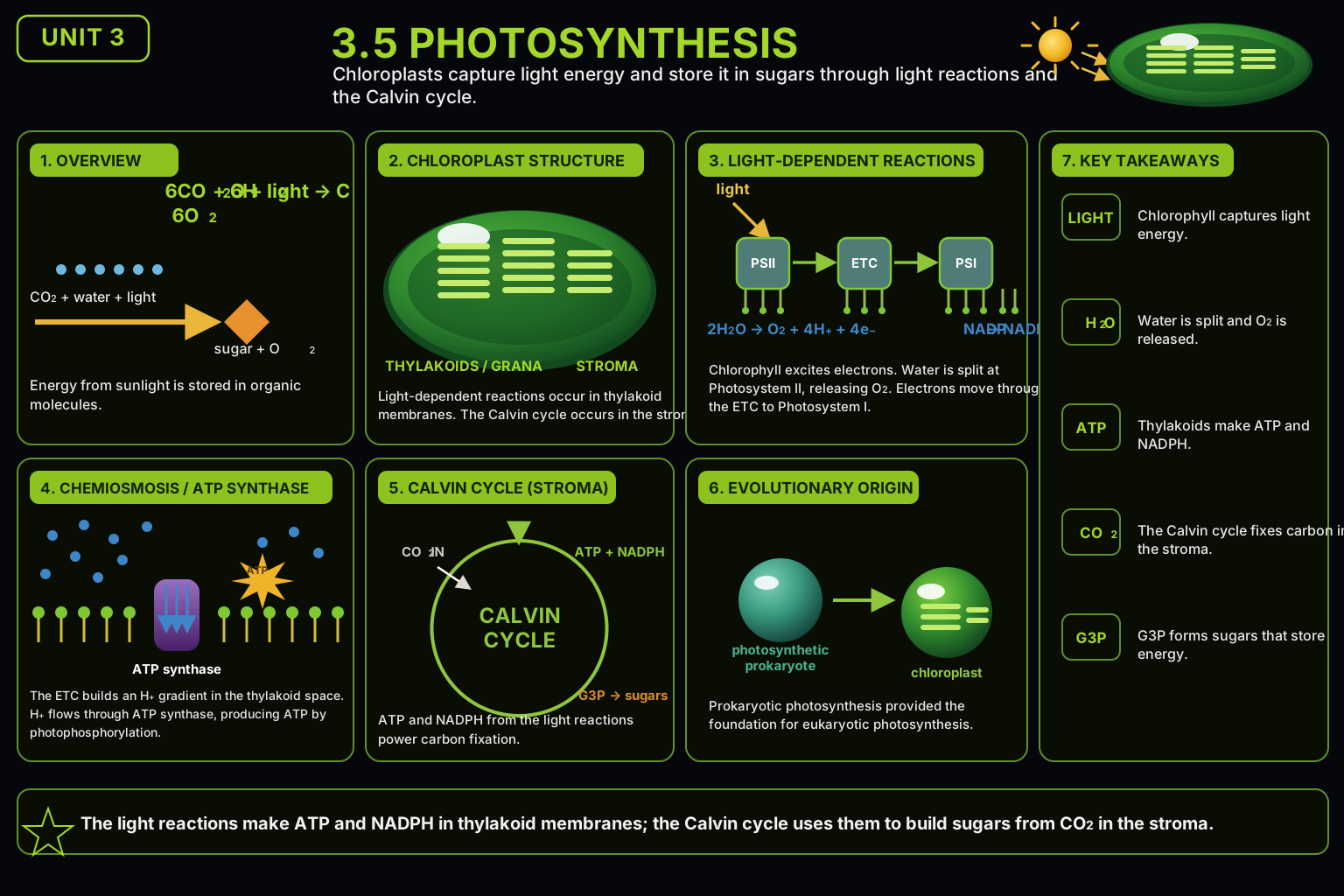
Photosynthesis is how a plant captures light energy and stores it in sugar. It runs in two connected stages inside the chloroplast. The light reactions, in the thylakoid membrane, split water to release O2 and build ATP and NADPH. The Calvin cycle, in the stroma, uses that ATP and NADPH to fix CO2 into sugar. Nothing here creates energy — light energy is transformed into chemical energy — and the plant still burns that sugar in its own mitochondria to live, day and night.
§1
The one big idea: photosynthesis transforms energy, it never creates it.
▸
Photosynthesis is the process a plant (or alga, or cyanobacterium) uses to capture light energy and store it as chemical energy in sugar. The overall reaction is 6 CO2 + 6 H2O + light energy → C6H12O6 + 6 O2. The single most important thing to understand is what that arrow means: energy is transformed from one form to another, never made from nothing. Light energy becomes chemical energy in the bonds of sugar. If you ever describe photosynthesis as “the plant creating energy,” you have the central idea backward.
The process happens in the chloroplast in two connected stages. The light reactions take place in the thylakoid membrane: they absorb light, split water, release O2, and store energy in the carriers ATP and NADPH. The Calvin cycle takes place in the surrounding stroma: it spends that ATP and NADPH to fix CO2 into sugar. The first stage powers the second.
Two things are easy to get wrong and worth fixing up front. First, the plant is not fed by photosynthesis alone — it makes its own food (sugar) rather than taking food from the soil, and it also runs cellular respiration in its mitochondria, around the clock, to actually use that sugar. Second, the O2 a plant releases comes from splitting water, not from the CO2 it takes in. Keep the energy-transforming, two-stage picture in mind and the rest of the topic clicks into place.
§2
Follow the atoms: from light and water to sugar.
▸
Photosynthesis is easiest to keep straight if you trace it in order, watching where the energy and the atoms go. Here are the steps.
- Light is absorbed — in the thylakoid. Chlorophyll in the thylakoid membrane absorbs light and boosts electrons to a high-energy state. This is where light energy first enters the system — it is captured, not created.
- Water is split — releasing O2. To replace those electrons, the light reactions split water (H2O). This is the source of the oxygen a plant releases: the O2 comes from water, not from CO2. Hydrogen ions and electrons are pulled off; O2 is the leftover.
- ATP and NADPH are made — the energy carriers. The energized electrons drive the thylakoid to build ATP and load electrons onto NADPH. These two molecules carry the captured energy from the light reactions to the next stage. This finishes the light-dependent part.
- The Calvin cycle fixes CO2 — in the stroma. In the stroma, the Calvin cycle grabs CO2 from the air and, using the ATP and NADPH, builds it into sugar. This stage is light-independent: it needs no light directly, only the products of the light reactions. It runs in the daytime too — whenever ATP and NADPH are available.
- Sugar is used — the plant respires. The sugar is the plant’s own food. The plant then runs cellular respiration in its mitochondria to release that stored energy as ATP — continuously, day and night, not only in the dark.
Notice the through-line: light energy is captured and handed from stage to stage as ATP and NADPH, and the atoms of CO2 and H2O are rearranged into sugar and O2. Nothing is created; everything is transformed.
§3
The terms you'll meet.
▸
Quick reference card. For each term, note where it happens and what it does — the two-stage split is the whole game.
§4
The Calvin cycle is “light-independent,” not “the dark reactions.”
▸
The Calvin cycle is often nicknamed “the dark reactions,” and that nickname causes more trouble than any other idea in this topic. It makes students think the cycle happens at night or only in the dark. It does not. The accurate name is the light-independent reactions.
What “light-independent” actually means. The Calvin cycle does not use light directly — no photon is absorbed in the stroma. But it completely depends on the products of the light reactions, namely ATP and NADPH. Those carriers are made only when light is shining. So in practice the Calvin cycle runs during the day, right alongside the light reactions, because that is when its fuel is being supplied.
Why it stalls in the dark. Take the light away and the light reactions stop making ATP and NADPH. Within moments the Calvin cycle runs out of fuel and grinds to a halt. So the cycle is not a night-shift process — it is a daytime process that happens to not need light striking it directly. “Independent of light” means “doesn’t absorb light itself,” not “happens when it’s dark.”
Where the atoms come from. The Calvin cycle takes in CO2 and builds its carbon into sugar — this is carbon fixation. The energy to do it comes from ATP, and the electrons (reducing power) come from NADPH. Note what is not here: the oxygen the plant releases was already let go back in the light reactions, when water was split. The CO2 is kept for its carbon.
The two stages are a relay. Light reactions capture energy and split water; the Calvin cycle spends that energy to make sugar. Neither stage creates energy — each just passes it along in a new form. Keep the relay picture and the “dark reactions” trap never catches you.
§5
3 mistakes that cost real points.
▸
“The oxygen a plant releases comes from the CO2 it breathes in.”
This is the classic photosynthesis error (code U3-BIO12). It feels natural — CO2 goes in, O2 comes out, so surely the oxygen was pulled off the CO2. It was not. The O2 comes from splitting water (H2O) in the light reactions. The CO2 is kept for its carbon, which is built into sugar in the Calvin cycle; its oxygen stays in the sugar and water, not in the released O2 gas.
Fix. Split the atoms in your head: water → the O2 you exhale-equivalent; CO2 → the carbon in sugar. Trace where each atom goes and the trap disappears.
“The Calvin cycle runs in the dark, and plants only respire at night.”
Two linked timing errors. First, the “dark reactions” nickname makes students think the Calvin cycle happens at night (code U3-BIO13). It is light-independent, meaning it doesn’t absorb light directly — but it depends on the ATP and NADPH the light reactions make, so it actually runs in the daytime and stalls when the light goes out. Second, students imagine plants photosynthesize by day and switch to respiration only at night (code U3-BIO16). In fact plants run cellular respiration continuously, day and night. In daylight they simply do both at once, and photosynthesis usually outpaces respiration.
Fix. Read “light-independent” as “doesn’t need light striking it,” not “happens in the dark.” And remember respiration never clocks out — every living cell, plant included, respires around the clock.
“Plants make energy from sunlight and get their food from the soil — they don’t respire.”
Several misconceptions bundled together. Photosynthesis does not create energy (code U3-BIO2); it transforms light energy into chemical energy in sugar — energy is always conserved. And a plant does not eat soil (code U3-BIO11): it builds its own food, sugar, from CO2 and water using light. Soil supplies water and minerals, not food. That same code covers the belief that plants don’t respire — they absolutely do, breaking down their own sugar in mitochondria to power the cell.
Fix. Say it as a chain: light energy → sugar (food the plant makes itself) → ATP via the plant’s own respiration. No energy is created, and no food comes from the dirt.
§6
Skill Check.
▸
Ten scenarios. Pick the chips that match your answer, then check. A scenario marks complete the first time every part is right. Progress saves on this device.