 Mistake Master
Cellular energy
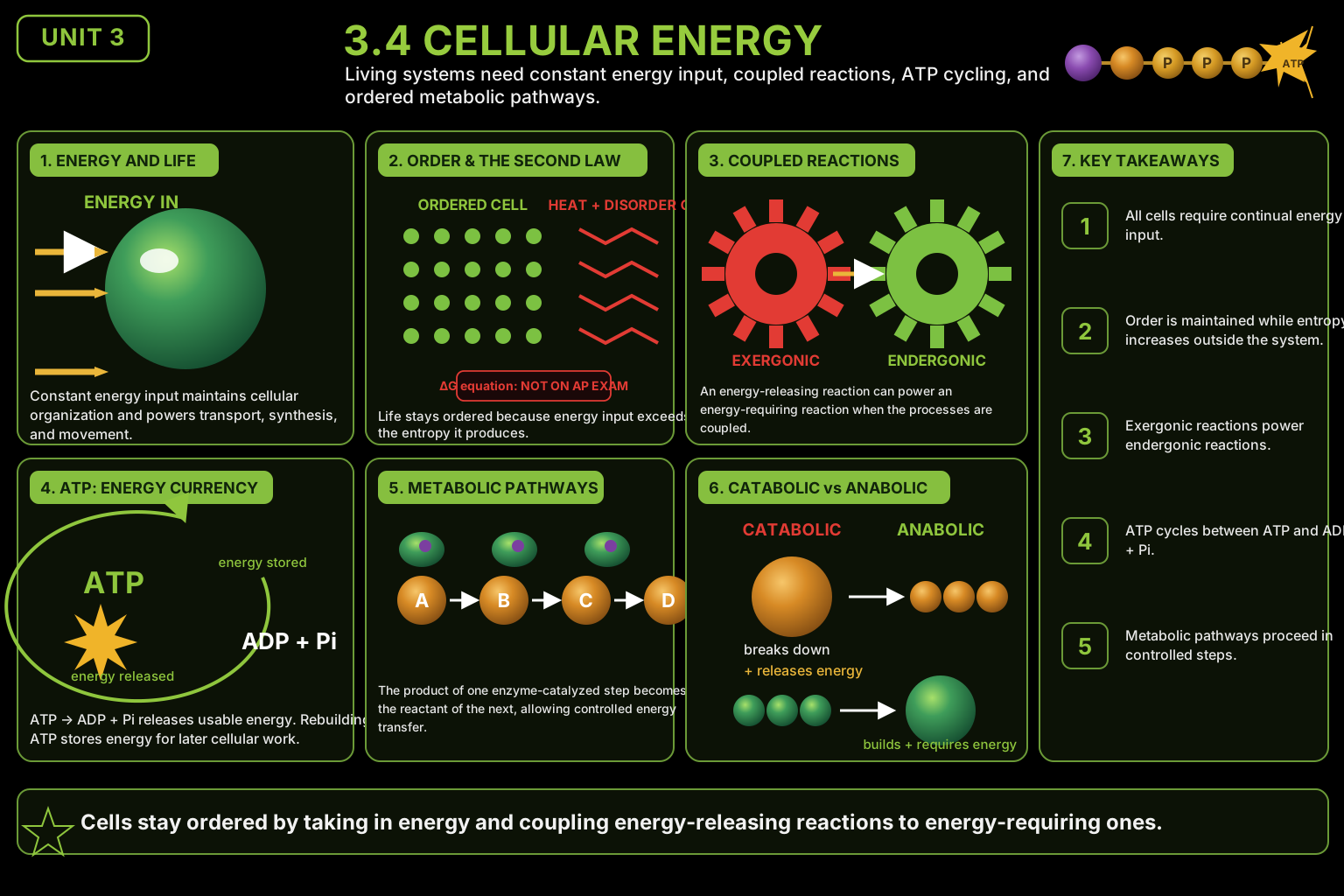
Cells never make energy and never destroy it — they only transform it from one form to another. That is the first law of thermodynamics, and it governs everything a cell does. The cell's usable currency is ATP, which powers work when its terminal phosphate is cut off by hydrolysis. And the mitochondrion, so often called the cell's "powerhouse," does not create energy either — it releases and transfers energy that was already held in glucose. Keep those three ideas straight and Unit 3 energetics falls into place.
§1
The one big idea: energy is conserved.
▸
The first law of thermodynamics says that energy can be neither created nor destroyed — it can only be transformed from one form into another. A cell obeys this law absolutely. When a cell “gets energy,” it is never conjuring new energy into existence; it is converting energy it already has from one form (say, the chemical energy in glucose) into another (the chemical energy in ATP, or heat, or mechanical work).
That single rule is the anchor for this whole topic. Photosynthesis does not create energy — it captures light energy and stores it as chemical energy in glucose. Cellular respiration does not destroy energy — it releases the chemical energy in glucose and transfers most of it into ATP, with the rest lost as heat. Add up all the energy before and after any cellular process and the total is unchanged. Energy just changes address, and always leaves a trail of heat behind.
Everything else in this topic follows from conservation: what ATP is and how it releases energy (hydrolysis of its terminal phosphate), and what the mitochondrion actually does (transfer energy out of glucose, not make it). If you ever find yourself saying a cell “produces energy” or an organelle “makes energy,” stop — the energy was already there, and the cell is only moving it between forms.
§2
ATP: how a cell carries and spends energy.
▸
A cell needs a portable, spendable form of energy it can deliver right where work is happening. That currency is ATP. Here are the pieces you need.
- ATP — adenosine triphosphate. An adenosine molecule with a tail of three phosphate groups. Those phosphates are all negatively charged and crowded together, an unstable, high-energy arrangement — think of a compressed spring straining to relax.
- Hydrolysis — how ATP is spent. Adding water splits off the terminal (outermost) phosphate, turning ATP into ADP + Pi. This reaction is exergonic: it releases usable free energy the cell can put to work.
- Where the energy comes from. The released energy is a property of the whole reaction — the strained, repelling phosphates relaxing into the more stable, better-solvated products. It is not energy that was “locked inside” a single bond waiting to pop out. Breaking a bond, on its own, always costs energy; the net release comes from the overall change in configuration.
- Energy coupling — paying for work. The cell couples ATP hydrolysis to reactions that would not happen on their own. The energy freed by hydrolysis drives the unfavorable reaction, so muscle contracts, molecules get built, and cargo moves against gradients.
- Recharging — ADP back to ATP. Reattaching a phosphate to ADP costs energy, so the cell must invest energy to rebuild ATP. That energy comes from breaking down fuels like glucose. ATP is a rechargeable shuttle, cycling between ATP and ADP thousands of times a day.
Notice the through-line: ATP does not contain a magic packet of energy in one bond. It carries energy in an unstable, high-energy arrangement, and hydrolysis releases that energy as the whole system relaxes to a more stable state.
§3
The terms you'll meet.
▸
Quick reference card. For each term, hold onto the same throughline — energy is being transformed and transferred, never made or destroyed.
§4
Mitochondria release energy — they don't make it.
▸
The mitochondrion is famously nicknamed the cell's “powerhouse,” and that nickname breeds a stubborn misconception: that the organelle somehow generates or creates energy out of nothing. It does not, and it cannot — the first law forbids it. What a mitochondrion actually does is release and transfer energy that was already present in fuel molecules.
The energy is in the glucose first. Before a mitochondrion does anything, the chemical energy is already stored in glucose (and other fuels). Cellular respiration inside the mitochondrion breaks glucose down step by step, releasing that stored chemical energy in controlled amounts. Nothing new is manufactured; existing energy is unpacked.
The mitochondrion is a converter, not a generator. The energy released from glucose is captured and transferred into ATP — the spendable form the rest of the cell can use. So the mitochondrion's job is a transformation: chemical energy in glucose becomes chemical energy in ATP, with a share always lost as heat. Energy in equals energy out; the total is conserved.
Trace the whole chain and it stays honest. The energy in glucose traces back to photosynthesis, which captured energy from sunlight. So the sun's energy was transformed into glucose, glucose's energy is transferred to ATP, and ATP's energy drives cellular work — a chain of transfers, with heat lost at every step, and not a single act of creation anywhere along the way.
Watch your verbs. A mitochondrion releases, transfers, and converts energy. It never makes, produces, or creates it. Keeping those verbs straight is the difference between a correct answer and a classic Unit 3 point-loser.
§5
3 mistakes that cost real points.
▸
“Cells (or organelles) create energy — and processes can destroy it.”
This is the deepest energetics error (code U3-BIO2). Students write that photosynthesis “makes energy” or that a working cell “produces energy,” or that using energy “destroys” it. The first law rules all of that out: energy is neither created nor destroyed, only transformed. Photosynthesis converts light energy into chemical energy; respiration converts chemical energy into ATP and heat. The books always balance.
Fix. Replace “make/produce/destroy energy” with “transform energy from one form to another.” Ask where the energy came from and where it went — it is always conserved, with some lost as heat.
“Energy is stored inside ATP's phosphate bond, and breaking that bond releases it.”
The naive picture (code U3-BIO9) imagines a bond as a container with energy stuffed inside, so snapping it lets the energy spill out. That is backwards: breaking a bond always costs energy. The usable energy from ATP comes from the whole hydrolysis reaction — the strained, mutually repelling phosphates relaxing into more stable, better-solvated products (ADP + Pᵢ). The net release is a property of the reaction, not a packet hidden in one bond.
Fix. Say “ATP hydrolysis is exergonic because the products are more stable than the reactants,” not “the bond stores energy.” Energy lives in the unstable arrangement, released when the system relaxes.
“Mitochondria make the cell's energy.”
The “powerhouse” nickname misleads students into thinking the mitochondrion generates energy (code U3-BIO10). It doesn't. The chemical energy is already in glucose; the mitochondrion releases it through respiration and transfers it into ATP, losing some as heat. It is a converter, not a generator — energy in equals energy out, exactly as conservation requires.
Fix. Use the verbs release and transfer, never make or create. The mitochondrion moves energy out of glucose and into ATP; it never adds new energy to the total.
§6
Skill Check.
▸
Ten scenarios. Pick the chips that match your answer, then check. A scenario marks complete the first time every part is right. Progress saves on this device.