 Mistake Master
Temperature, pH, and the enzyme optimum
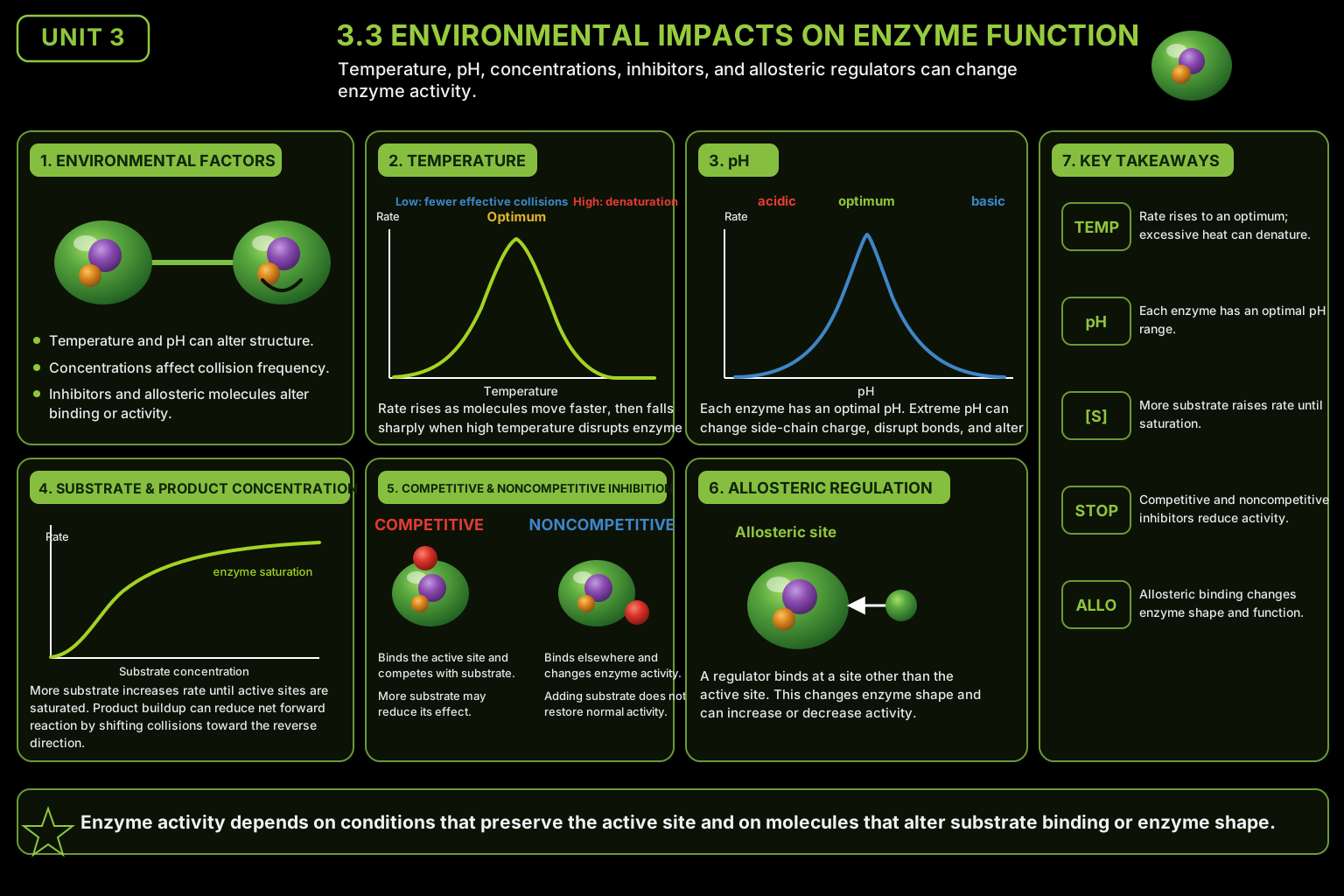
Every enzyme has a temperature and a pH where it works best — its optimum. Warming a cold reaction speeds it up, but only up to that peak: push past the optimum and the enzyme denatures, its carefully folded active site coming apart so the rate falls. More heat is not always faster. Denaturation unravels the enzyme's three-dimensional shape; it does not cut the peptide backbone, and for mild cases the protein can refold and work again. Through all of it the enzyme stays a catalyst — never used up.
§1
The one big idea: every enzyme has an optimum.
▸
An enzyme works because its chain of amino acids folds into a precise three-dimensional shape, and that shape depends on the conditions around it. Change the temperature or the pH too far and you change the shape — and therefore the rate. The single most important idea in this topic is that each enzyme has an optimum: a temperature and a pH at which it works fastest, with performance dropping off on either side.
This means reaction rate is not a straight line that climbs forever with temperature. Picture the curve instead: as you warm a cold reaction, the rate rises toward the peak; at the optimum it is fastest; and past the optimum the rate falls — sharply — as the enzyme comes apart. Up, then down. The same “there is a best value, and too much is worse” shape holds for pH.
Two cautions ride along with that curve, and they are the traps this topic is built to fix. First, more heat is not always faster — only up to the optimum. Second, when high heat “wrecks” an enzyme, what actually happens is that its folded shape unravels (denaturation), not that it is used up and not that its chemical backbone is cut. Keep the peaked curve in mind and the rest of the topic clicks into place.
§2
Temperature: up to the optimum, then down.
▸
Walk the temperature axis from cold to hot and watch what happens to the rate. The story is two opposing effects: warming supplies energy (helpful) until heat starts to unfold the enzyme (fatal).
- Below the optimum — warming speeds things up. Raising the temperature gives molecules more kinetic energy: enzyme and substrate move faster and collide more often, so more reactions happen per second. This is the rising part of the curve, and it is why a cold reaction speeds up when you warm it.
- The optimum — the peak rate. At one particular temperature the rate is highest. For many human enzymes this optimum is near body temperature, about 37 °C. This is the best trade-off point — enough energy to react quickly, not yet enough to damage the enzyme.
- Above the optimum — denaturation takes over. Push past the peak and added heat starts to shake apart the enzyme's folded shape. The active site loses its precise geometry, substrate no longer binds well, and the rate falls — steeply. This is why hotter is not better: beyond the optimum, more heat means less activity.
- The temperature–rate curve — an asymmetric peak. Put those together and you get a lopsided hill: a gentle climb up to the optimum, then a sharp cliff down as denaturation sets in. It is never a straight line rising forever.
- Cold — slow but usually safe. Below the optimum the rate is low simply because molecules move sluggishly — but the enzyme is not denatured. Warm it back toward the optimum and full activity returns. Cold pauses an enzyme; it does not, on its own, destroy it.
Notice the through-line: the rising side is about energy for collisions, and the falling side is about losing the folded shape. Two different mechanisms meet at the optimum — which is exactly why the curve has a peak instead of climbing without limit.
§3
The terms you'll meet.
▸
Quick reference card. For each term, read what it is and what it does to the rate — the optimum-and-denaturation pair is the whole game.
§4
Denaturation: what it is, and what it is not.
▸
When heat or extreme pH “wrecks” an enzyme, the word for it is denaturation. It is worth being precise about what does and does not happen, because two very common exam errors live right here.
What denaturation is. Denaturation is the loss of the enzyme's folded three-dimensional shape. The chains of amino acids that were tucked into a precise arrangement come loose — the higher-order folding (the coils, sheets, and overall globular shape) unravels. Because the active site is that shape, it stops holding substrate, and catalysis stops. High temperature does this by shaking the molecule apart; extreme pH does it by disrupting the charges and hydrogen bonds that held the fold together. Different causes, same result: the shape is lost.
What denaturation is not: it does not break the peptide backbone. This is the key point. The covalent peptide bonds that link one amino acid to the next — the protein's primary structure — are not cut by denaturation. The sequence of amino acids is still there, still connected in the same order; it has simply lost its folded arrangement. Denaturation disrupts folding, not the chemical backbone.
So it is often reversible. Because the amino acid sequence is intact, a mildly denatured protein can frequently refold to its working shape once normal conditions return — called renaturation. Cool an overheated enzyme back toward its optimum, or restore the pH, and activity can come back. “Denatured” does not automatically mean “destroyed forever.” (Severe or prolonged denaturation can become effectively permanent when unfolded chains tangle and clump — think of a fried egg — but even then it is the folding that is lost, not the peptide bonds.)
And the enzyme is still a catalyst. Denaturation is about shape, not about being consumed. An enzyme is never used up by the reaction it speeds; if its rate falls at high temperature, that is because it unfolded, not because it ran out. Refold it and the same molecule works again, over and over. Optimum, denaturation-as-unfolding, and reusable catalyst are the three ideas to keep straight.
§5
3 mistakes that cost real points.
▸
“More heat always means a faster reaction.”
The most common temperature error (code U3-BIO7). Students see that warming a cold reaction speeds it up and extend the pattern forever: if 37 °C is faster than 20 °C, surely 80 °C is faster still. It is not. The temperature–rate curve rises only up to the optimum; past that point the enzyme denatures and the rate crashes. Beyond the optimum, more heat means less activity, not more.
Fix. Draw the curve as a peaked hill, not a ramp. Added heat helps only until the optimum; after that it unfolds the enzyme and activity falls.
“Denaturation is permanent and breaks the peptide bonds.”
This double error (code U3-BIO8) gets denaturation wrong in two ways at once. First, denaturation does not cut the covalent peptide bonds of the backbone — the amino acid sequence stays intact; what is lost is the folded 3-D shape. Second, because that sequence survives, mild denaturation is often reversible: cool the enzyme back toward its optimum or restore the pH and it can refold and work again. “Denatured” is not a synonym for “chopped up” or “destroyed forever.”
Fix. Say it precisely: denaturation disrupts folding, not the peptide backbone, and it can often be undone. Backbone-breaking is a different, more drastic event.
“The rate falls at high temperature because the enzyme gets used up.”
When activity drops past the optimum, some students reach for the old “used-up” explanation (code U3-BIO1) — as if heat makes the enzyme burn through faster and run out. That is not it. An enzyme is a catalyst; it is never consumed by the reaction, at any temperature. The rate falls because the enzyme denatured (lost its shape), not because it ran out. Refold it and the very same molecule works again.
Fix. Separate two ideas: catalysts are not consumed, so a falling rate is about lost shape (denaturation), never about the enzyme being spent.
§6
Skill Check.
▸
Ten scenarios. Pick the chips that match your answer, then check. A scenario marks complete the first time every part is right. Progress saves on this device.