 Mistake Master
Enzyme catalysis
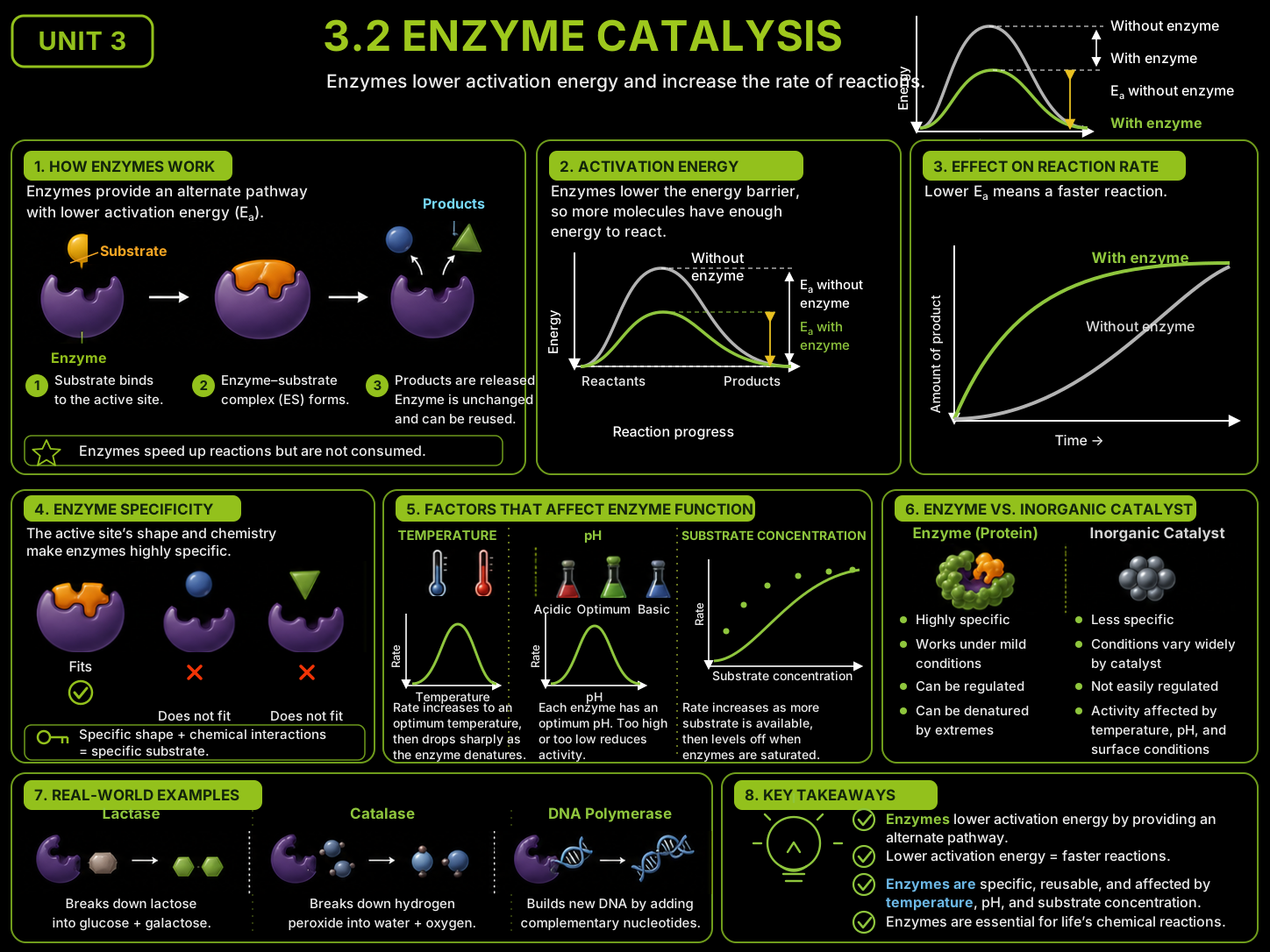
An enzyme speeds a reaction by lowering its activation energy — the barrier the reactants must climb to react. That is the enzyme's whole trick. It does not change how much energy the reaction gives off (ΔG), and it does not shift where the reaction settles (the equilibrium position); it only changes how fast the reaction gets there, in both directions. The energy of the reaction comes from the reactants themselves — the enzyme supplies none of it — and the enzyme, being a catalyst, walks away unchanged and ready to do it all again.
§1
The one big idea: enzymes are reusable catalysts.
▸
Every reaction has a hill to climb before it can happen. Even a reaction that gives off energy overall starts by breaking or rearranging bonds, and that costs an upfront push of energy called the activation energy — the barrier between reactants and products. The taller that barrier, the rarer the collisions energetic enough to clear it, and the slower the reaction goes.
An enzyme's one job is to lower that activation-energy barrier. By holding the reactants in just the right orientation and straining their bonds, the enzyme opens an easier path over the hill. More molecules can now make it across per second, so the reaction speeds up — often by many orders of magnitude. That is the entire mechanism of catalysis: a lower barrier, a faster reaction.
Notice what the enzyme does not touch. It does not change how much energy the reaction releases or absorbs, and it does not decide which way the reaction ends up leaning — it only changes the speed. And like any catalyst, it is not consumed doing this (code U3-BIO1): it lowers the barrier, releases the product, and is free to do it again. The next sections unpack each of those points.
§2
The active site and substrate specificity.
▸
The clearest way to see what an enzyme does is on an energy diagram: reactants on the left, products on the right, and a hill in between. Walk it left to right.
- Reactants — the starting energy. The reactants sit at some energy level on the left. This energy belongs to the molecules themselves; the enzyme does not add to it. Whatever happens next, the reactants supply the energy for the reaction, not the enzyme (code U3-BIO6).
- Activation energy — the barrier. Before any product forms, the molecules must reach a high-energy transition state at the top of the hill. The height of that climb is the activation energy. A tall barrier means few molecules make it over, so the reaction is slow.
- The enzyme — a lower path. An enzyme binds the reactants and provides an easier route over the hill: it lowers the top of the barrier. Nothing about the reactants' or products' own energies changes — only the height of the peak between them comes down.
- Products and ΔG — unchanged. The products land at the same energy level with or without the enzyme, so the overall free-energy change, ΔG (products minus reactants), is exactly the same. The enzyme does not change ΔG and does not move the equilibrium position the reaction settles toward (code U3-BIO5).
- Rate, not direction. Because the barrier is lower in both directions, the enzyme speeds the forward and reverse reactions alike. It gets the system to its equilibrium faster; it does not change where that equilibrium lies.
Read the diagram twice — once with the enzyme, once without. The only line that moves is the top of the hill. The reactant level, the product level, and therefore ΔG all stay put.
§3
The terms you'll meet.
▸
Quick reference card. For each term, read what it is and whether an enzyme changes it — the line between rate and thermodynamics is the whole game.
§4
Rate versus thermodynamics: the line you must not cross.
▸
The single most tested idea in this topic is the boundary between two questions: how fast a reaction goes, and which way and how far it goes. An enzyme answers only the first. Keeping these separate saves the points people most often lose.
An enzyme changes the rate. By lowering the activation-energy barrier, the enzyme lets far more molecules react per second. That is a kinetic effect — it is about speed. A reaction that would take years without the enzyme might finish in seconds with it, and yet nothing about the reaction's energy bookkeeping has moved.
An enzyme does not change ΔG. The free-energy difference between products and reactants is fixed by the molecules, not by any catalyst. Lowering the barrier does not lift the reactants or lower the products; both endpoints stay exactly where they were, so ΔG is unchanged. An enzyme cannot make an endergonic (ΔG > 0) reaction spontaneous, and it cannot make a spontaneous reaction release more energy (code U3-BIO5).
An enzyme does not shift the equilibrium. Because it lowers the barrier for the forward and reverse reactions equally, it speeds both directions by the same factor. The reaction reaches its equilibrium sooner, but the final balance of products to reactants — the equilibrium position — is identical to what it would be with no enzyme at all.
The enzyme supplies no energy. It is tempting to think the enzyme “powers” the reaction, but it does not. The energy of the reaction comes entirely from the reactants; the enzyme just lowers the hill they have to climb (code U3-BIO6). And having done so, it is released unchanged — a reusable catalyst, never consumed (code U3-BIO1).
§5
3 mistakes that cost real points.
▸
“The enzyme makes the reaction release more energy — it changes ΔG.”
This is the signature error of the topic (code U3-BIO5). Students reason that if the enzyme speeds the reaction, it must be giving the reaction a bigger energetic payoff, or making an unfavorable reaction favorable. It does neither. An enzyme lowers the activation barrier only; the reactant and product energy levels do not move, so ΔG is unchanged. An enzyme cannot turn an endergonic reaction spontaneous or squeeze extra energy out of an exergonic one.
Fix. Say it explicitly: enzymes change the rate, not ΔG. On an energy diagram, the only thing that drops is the top of the hill — never the endpoints.
“The enzyme pulls the reaction toward more product — it shifts the equilibrium.”
Closely related (also code U3-BIO5): because product piles up faster with an enzyme, students conclude the enzyme must favor the forward direction and shift the equilibrium position. It doesn't. The enzyme lowers the barrier for the forward and reverse reactions equally, so it speeds both. You simply reach the same equilibrium sooner. The final ratio of products to reactants is exactly what it would be with no enzyme.
Fix. Enzyme = faster to equilibrium, not a different equilibrium. If your answer says the enzyme “drives” or “pushes” the reaction one way, rewrite it.
“The enzyme provides the energy that powers the reaction.”
Students often picture the enzyme as an energy source that injects the push needed to react (code U3-BIO6). It is not. The energy of the reaction comes from the reactants themselves; the enzyme contributes none. What it does is lower the barrier so the energy the reactants already have is enough to get over the hill. And because it is a catalyst, it is not consumed doing so (code U3-BIO1) — it is released unchanged and reused.
Fix. The enzyme lowers the hill; the reactants supply the climb. If your explanation has the enzyme “giving” or “adding” energy, correct it.
§6
Skill Check.
▸
Ten scenarios. Pick the chips that match your answer, then check. A scenario marks complete the first time every part is right. Progress saves on this device.